
Long before modern ports, shipping lanes and container terminals, a small town on the western coast of India was already handling boats in a purpose-built harbour. That town was Lothal, and it holds the remarkable title of the world’s first man-made dockyard.
Located in present-day Gujarat, Lothal was a key trading hub of the Harappan (Indus Valley) Civilisation. Today, this ancient site is the heart of an ambitious national project, the National Maritime Heritage Complex (NMHC), which aims to celebrate India’s long relationship with the sea.
Let’s dive into the story of this engineering marvel and what it means for India’s maritime identity.
What Makes Lothal the First Man-Made Dockyard?
Lothal dates back to around 2400 BCE. Its name loosely translates to “mound of the dead” in Gujarati, but the site tells a very lively story.
Archaeologists discovered a large, rectangular basin lined with baked bricks on the eastern side of the town. Measuring roughly 220 metres in length and about 37 metres in width, this structure is widely regarded as the earliest known tidal dock in human history.
The dock was connected to an old course of the Sabarmati River, which led to the Gulf of Khambhat. This allowed ships to sail in during high tide and stay safely berthed when the water receded.
The Brilliant Engineering Behind the Dock
What makes the Lothal dockyard truly impressive is its planning. The Harappans understood tides, water flow and silt movement, knowledge that many civilisations only developed centuries later.
The basin had inlet and outlet channels to manage water levels. A spillway helped control overflow, keeping boats afloat even during low tide. Kiln-fired bricks were used to resist the constant wear of saltwater.
Next to the dock stood a raised warehouse platform. Goods could be loaded and unloaded efficiently, then stored safely away from floods. This setup shows a level of logistics thinking that feels surprisingly modern.
Lothal as a Global Trade Hub
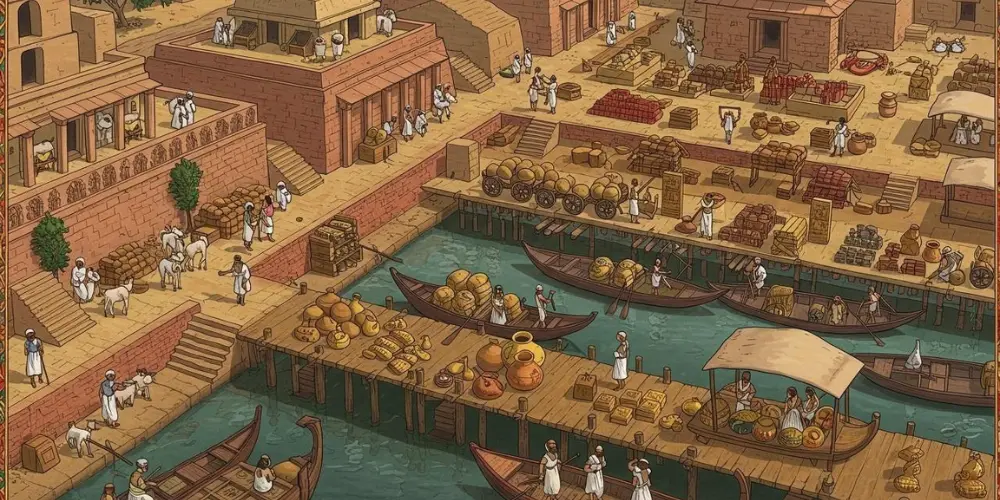
Lothal was not just a local harbour. It was a busy centre for international commerce.
The Harappans traded with distant regions such as Mesopotamia, Egypt, Oman and the Persian Gulf. Beads, shell jewellery, copper items, ivory and cotton goods moved through this port.
Excavations uncovered a bead-making factory, seals and weights, all pointing to a well-organised economy. A seal of Persian Gulf origin found at the site confirms that Lothal was part of a vast maritime network stretching across the ancient world.
In many ways, Lothal stands as proof that the Harappans were among the pioneer seafarers of history.
Rediscovering Lothal: The Excavation Story
The site was brought to light by archaeologist S.R. Rao of the Archaeological Survey of India. Excavations between 1955 and 1960 revealed the dock, streets, drainage systems and homes.
Like other Harappan cities, Lothal followed a grid layout. It had covered drains, bathing platforms and neatly divided residential blocks. These details reveal a society that valued hygiene, order and community planning.
Over time, floods and shifting river courses led to the decline of the port. Yet the remains survived, waiting to share their story with future generations.
The National Maritime Heritage Complex at Lothal
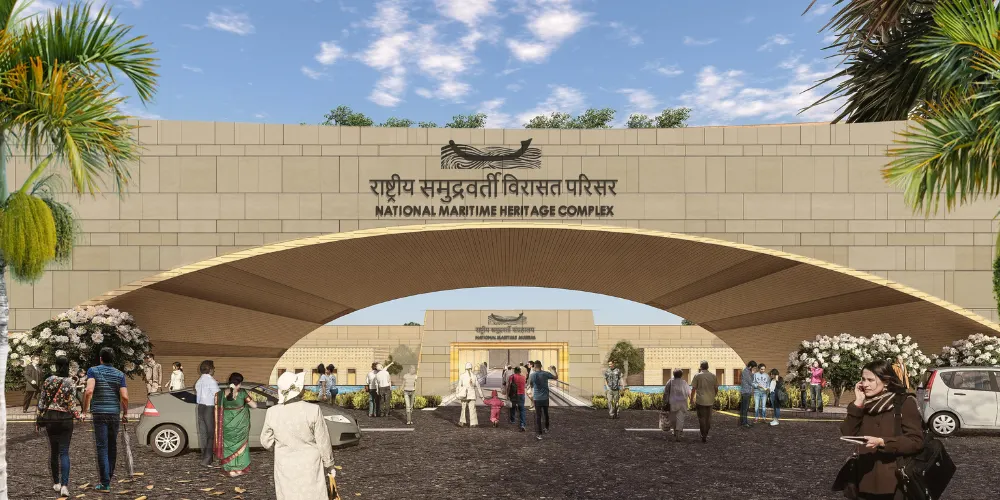
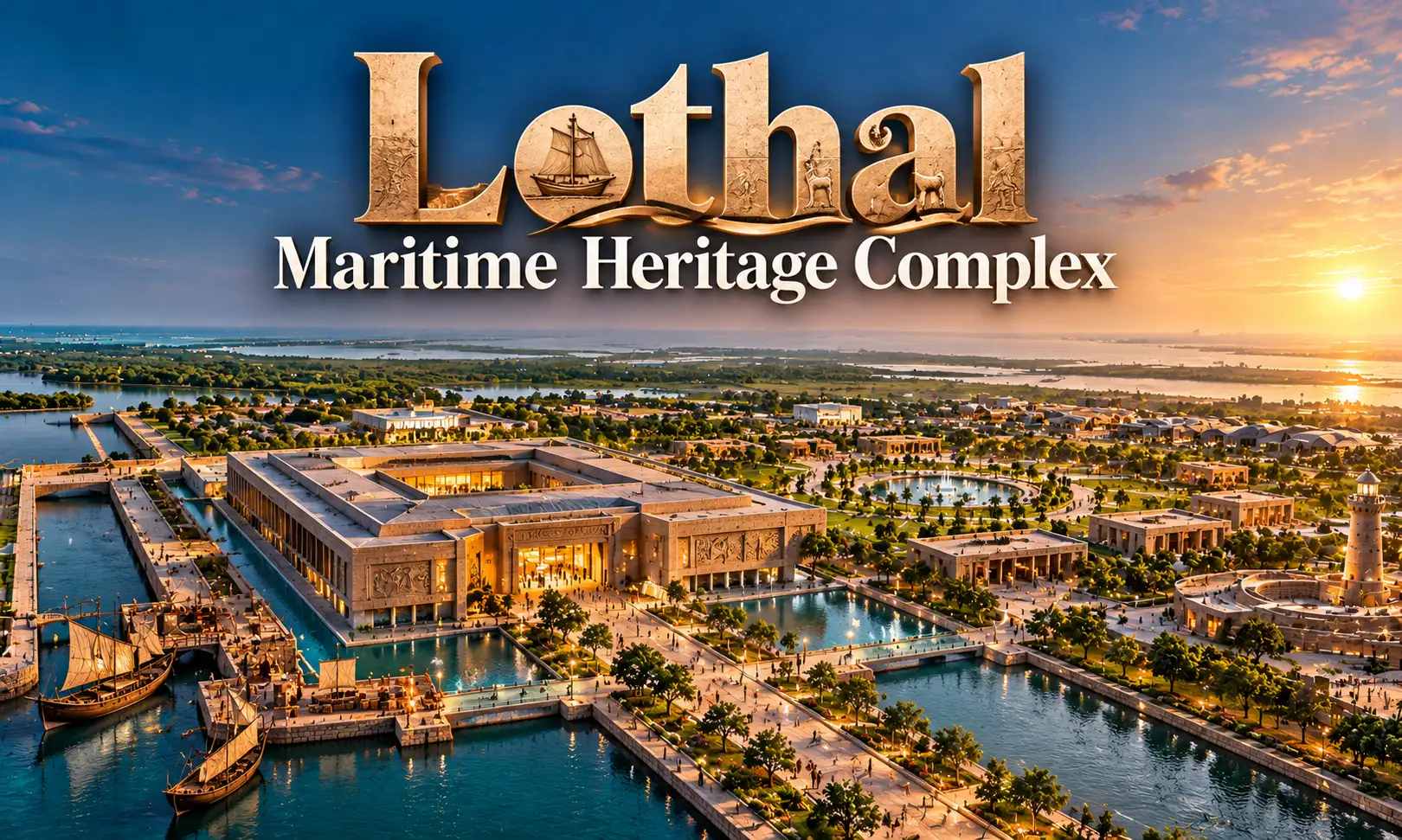
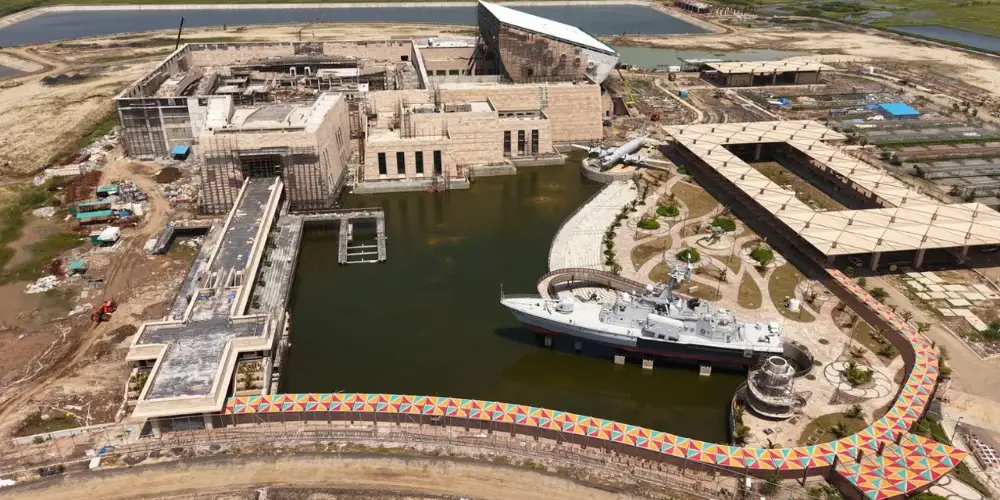
To honour this legacy, the Ministry of Ports, Shipping and Waterways is developing the National Maritime Heritage Complex (NMHC) near the ancient site in Saragwala, Gujarat.
The complex is designed as a large maritime museum and cultural destination. It plans to house 14 galleries covering India’s sea story from ancient myths to the modern Navy.
One gallery focuses on ocean mythology and underwater archaeology. Another is dedicated to the Harappans as early sailors, highlighting trade with Mesopotamia, Egypt and the Gulf region, along with port cities like Lothal and Dholavira. Later galleries trace post-Harappan trade routes, India’s links with the Greco-Roman world, and the growth of the Indian Navy and Coast Guard.
A special highlight is the planned Lothal Town, a recreated mini Harappan settlement set in the museum’s central courtyard. Surrounded by water to echo the old dock, it will feature ancient-style houses, streets, workshops and even a barter-style marketplace.
What Visitors Can Experience Today
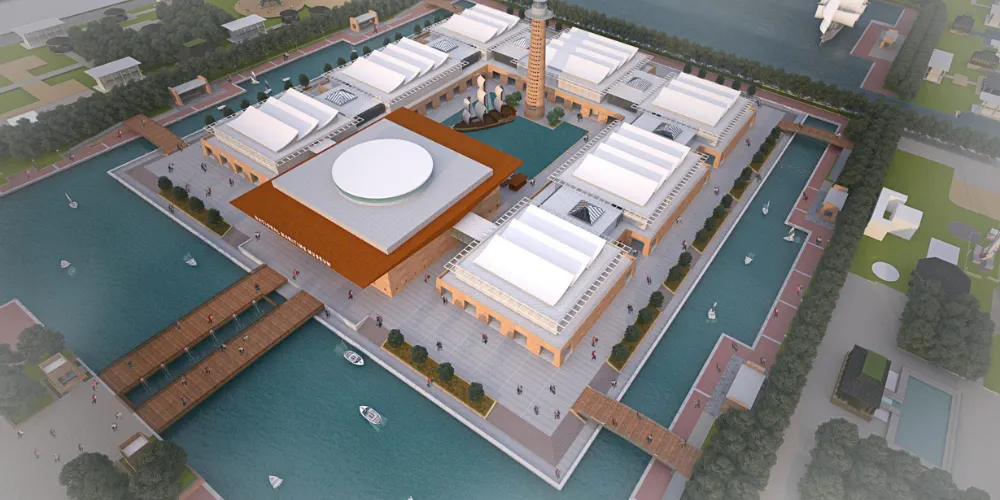
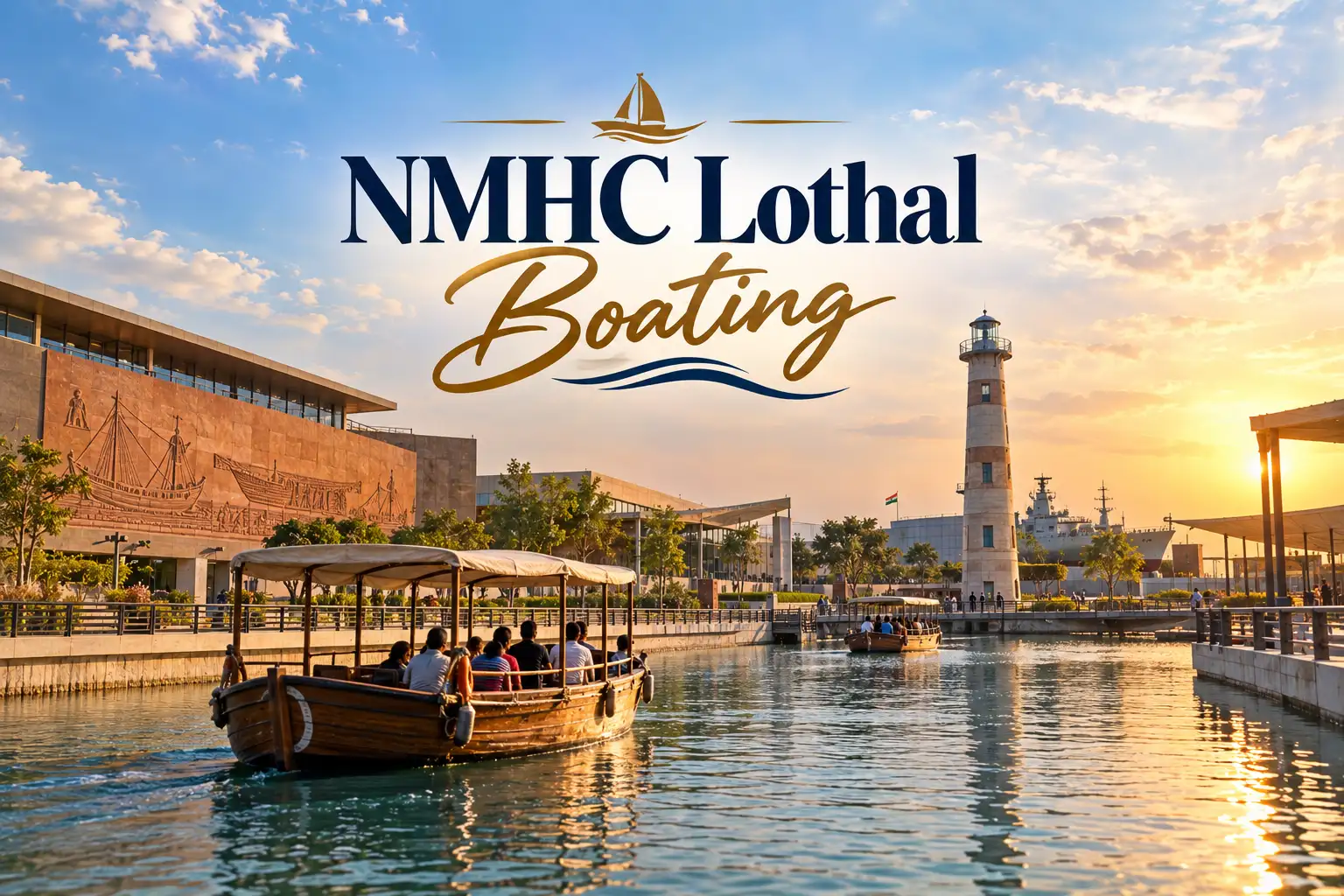
NMHC already offers several attractions for curious travellers. Visitors can see the decommissioned warship INS Nishank, along with an IL-38 SD aircraft and a Sea Harrier jet on display. Boating experiences are also available.
Future plans include a lighthouse museum, a 5D dome auditorium, coastal state pavilions, maritime-themed eco resorts and several theme parks. The project has also drawn international collaboration from countries such as Portugal, the UAE, Oman, the Netherlands and Vietnam.
The site has welcomed high-profile visits too, including Prime Minister Narendra Modi in September 2025, underlining its national importance.
Why Lothal Still Matters
Lothal is more than an archaeological site. It is a reminder that India’s maritime journey began thousands of years ago.
The first man-made dockyard reflects the scientific thinking, trade vision and engineering skill of the Harappans. Through NMHC, this forgotten chapter is being revived for students, historians and travellers alike.
If you love history, oceans or ancient innovation, Lothal deserves a place on your travel list.
Frequently Asked Questions
It is at Lothal, in the Ahmedabad district of Gujarat, India.
It dates back to around 2400 BCE, during the Harappan Civilisation.
Archaeologist S.R. Rao led the excavations between 1955 and 1960.
It berthed trading ships and supported commerce with Mesopotamia, Egypt and the Persian Gulf.
The National Maritime Heritage Complex is a museum and heritage project at Lothal showcasing India’s maritime history.