
Mumbai grew around its harbour. Mundra became a powerhouse because of its port. Now, Gujarat is placing a similar bet on Dholera Special Investment Region (SIR).
The plan for a new deep-sea port at Bhavnagar, linked closely to Dholera, is changing how people see this upcoming smart city. It is no longer just a planned township on paper. It is shaping up as a future gateway for trade between India and the world.
Let us look at what this port is, why it matters, and what it could mean for the region.
The Big Idea: Pairing a Smart City With a Seaport
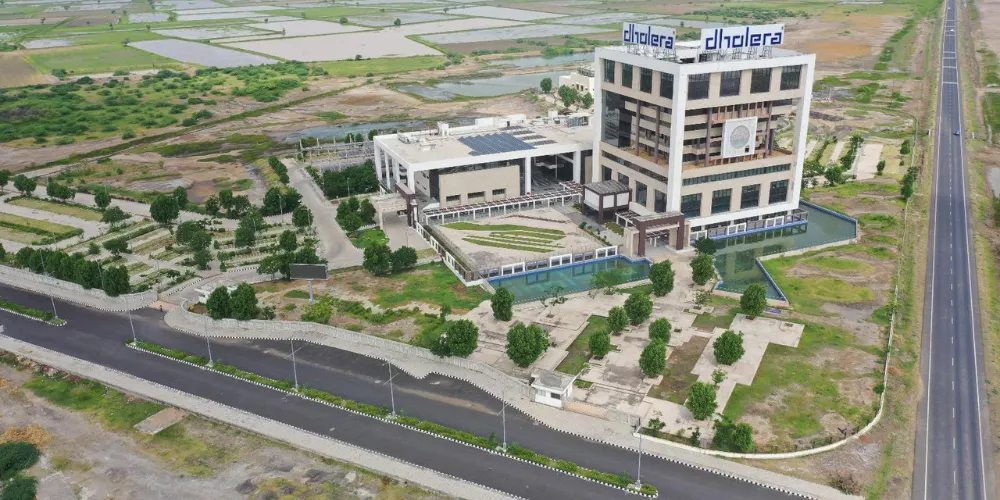
Dholera SIR was planned as one of India’s first greenfield smart cities. It sits on the Delhi–Mumbai Industrial Corridor (DMIC), around 100 km from Ahmedabad.
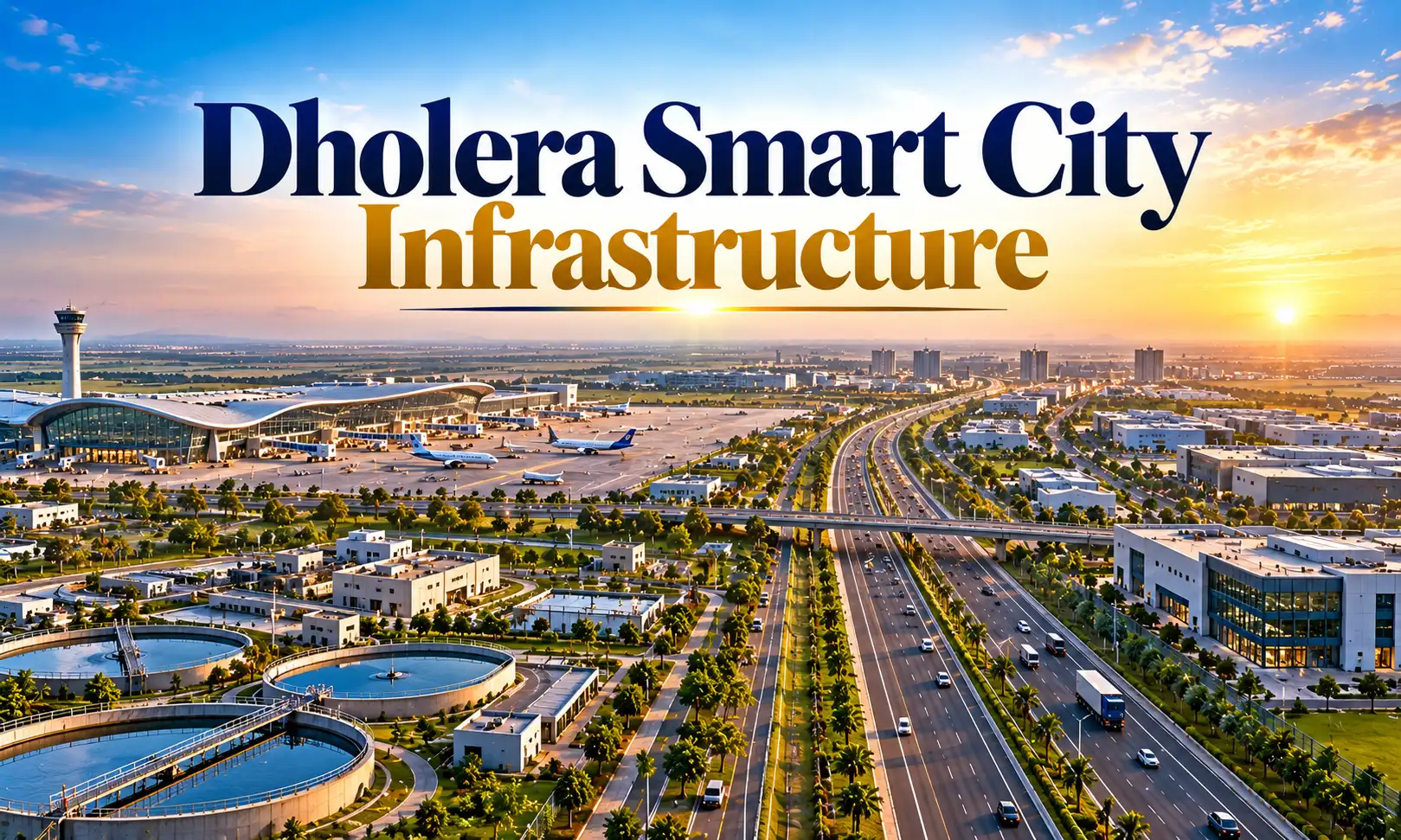
Roads, an airport and industrial zones were always part of the plan. But a city built for manufacturing also needs a fast way to move goods overseas.
That is where the Bhavnagar port comes in.
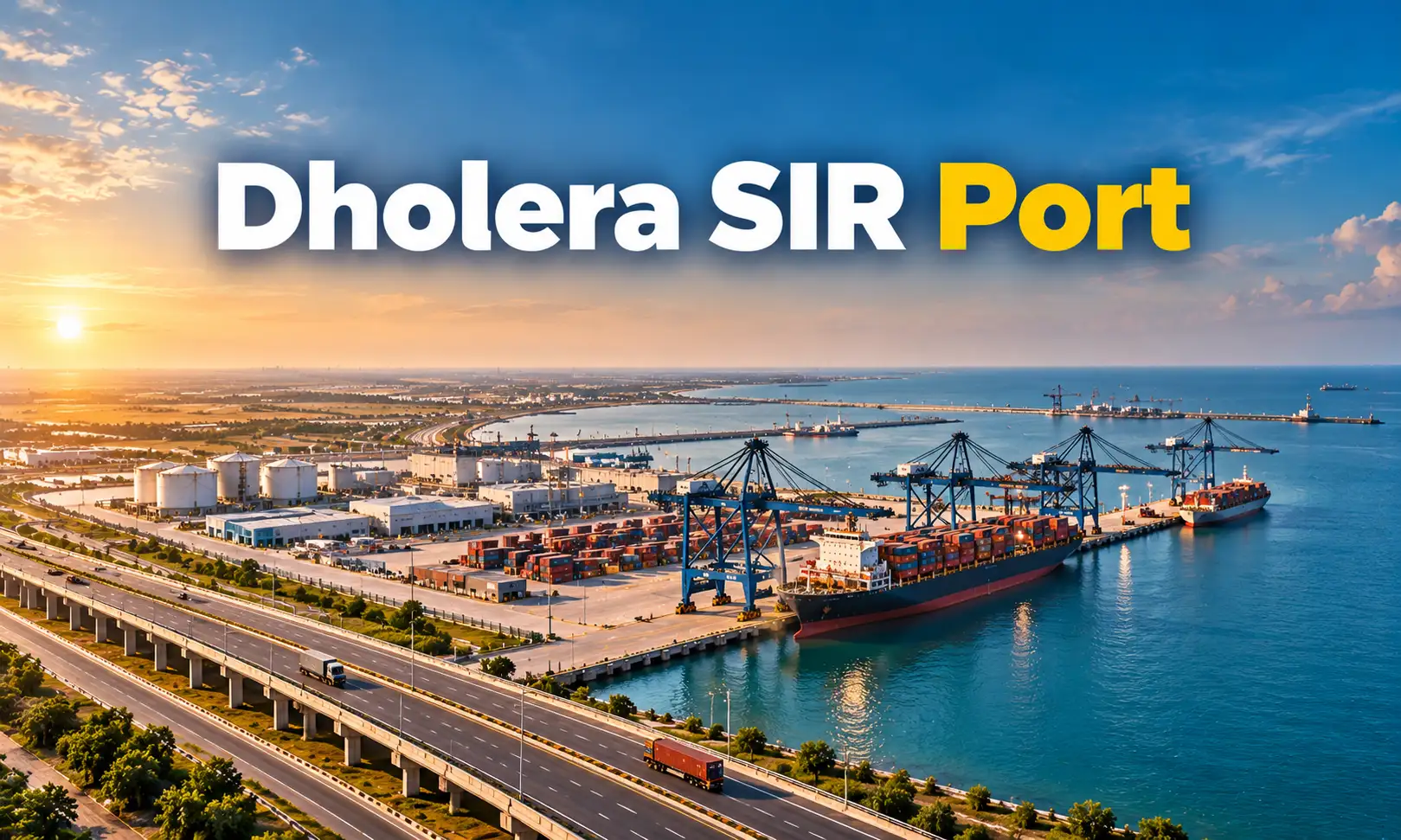
The Government of Gujarat is developing a new deep-sea port at Bhavnagar under the wider Dholera SIR vision. A Memorandum of Understanding (MoU) has been signed for its development. The project will be built in phases.
In simple terms, Dholera will make things, and the port will ship them out.
What the Bhavnagar Port Project Includes
The port is being designed as a full-scale cargo hub, not a small jetty. As per the details shared so far, here is what the project covers:
- Investment: An estimated ₹3,400 to ₹4,500 crore
- Land area: About 580 hectares (roughly 1,200 acres)
- International terminals: 3 terminals for global trade
- Bulk cargo terminals: 2 new terminals for imports and exports
- Liquid cargo: Dedicated facilities for chemicals, LNG, LPG and other liquids
- Connectivity: A 3.4 km dedicated link connecting the port with the wider transport network
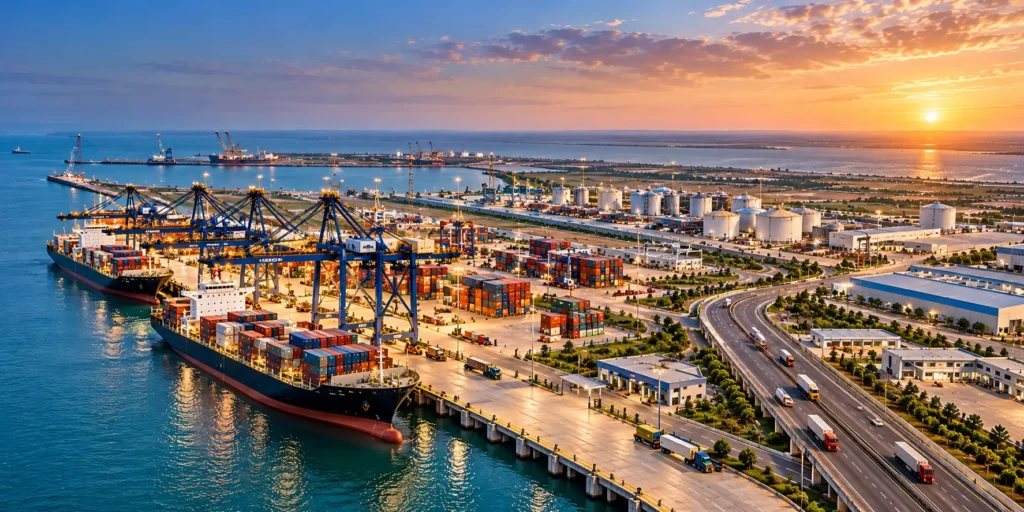
A modern container terminal is planned as a key part of the first phases. Storage tanks, a logistics terminal and advanced cargo handling systems will also be developed.
The goal is to meet global port standards from day one.
Why a Port Changes Everything for Dholera
A port is not just a place where ships dock. It is an economic engine. Here is how it can shape Dholera’s growth.
1. Lower Logistics Costs
Today, many factories in Gujarat send goods by road to distant ports. That adds time, fuel and cost.
A port close to Dholera cuts this distance. For manufacturers, lower freight costs mean better margins and more competitive exports.
2. A Magnet for Industry
Companies prefer to set up plants where raw materials can come in easily and finished goods can go out quickly.
With a port nearby, Dholera becomes more attractive for sectors like electronics, chemicals, engineering and heavy manufacturing.
3. Thousands of New Jobs
Ports create jobs directly in shipping, warehousing and cargo handling. They also create jobs indirectly in transport, trade services, hospitality and housing.
This kind of employment growth often brings people, and people bring demand for homes, schools and shops.
4. A Stronger Place in Global Trade
With international terminals, the region can link directly to global shipping routes. That puts Dholera and Bhavnagar on the map for exporters and importers across Western India.
Built for Every Kind of Cargo
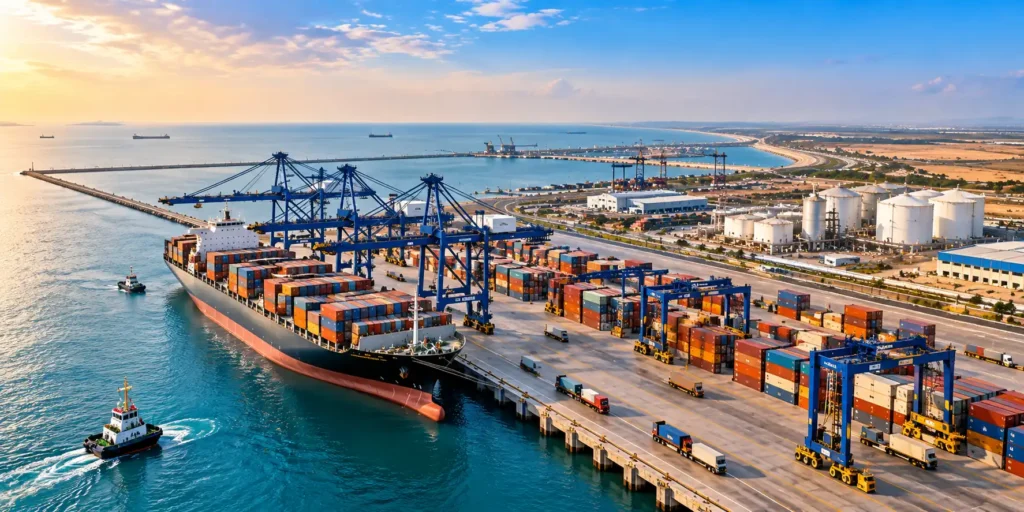
One of the strongest points of this project is its range. Many ports focus on one type of cargo. This one is planned to handle almost all of them.
Container cargo – Packaged goods, electronics, textiles and finished products.
Bulk cargo – Coal, minerals, cement, grains and industrial raw materials.
Liquid cargo – Chemicals, petroleum products and other liquid goods.
Gas cargo – LNG and LPG, which are vital for India’s growing energy needs.
This mix matters. It means the port can serve a wide variety of industries, from energy firms to small exporters. A diverse cargo base also makes a port more stable over time, since it does not depend on one sector.
How the Port Fits Into Dholera’s Bigger Picture
The port does not stand alone. It is one piece of a much larger plan for the region. Dholera SIR is being developed with several major projects that work together:
- Semiconductor hub: Dholera has been chosen as a site for large semiconductor manufacturing investment, a first-of-its-kind push for India.
- Dholera International Airport: A new greenfield airport to handle passengers and air cargo.
- Ahmedabad–Dholera Expressway: A high-speed road link that cuts travel time to Ahmedabad.
- Rail and transit plans: Metro, high-speed rail and other transit links are part of the region’s long-term vision.
- Coastal shipping: Better use of sea routes along Gujarat’s coastline.
When you put all of this together, a clear picture appears. Dholera is being planned with road, rail, air and sea links in one place. That combination is rare in India.
This is why many experts call it a multi-modal logistics zone in the making.
Think of it this way. A component made in a Dholera factory could reach the port by a short dedicated road, sail to a global market, and arrive faster than goods sent from inland cities. That speed is exactly what export-focused industries look for when they choose a new location.
What It Means for Western India
Gujarat already handles a large share of India’s sea trade. A new port at Bhavnagar adds more capacity along its coast.
For Western India, this could mean:
- Faster export routes for factories in Gujarat, Rajasthan and Madhya Pradesh
- Less pressure on older, crowded ports
- New industrial clusters along the Dholera–Bhavnagar belt
- Better supply chains for energy products like LNG and LPG
It also supports India’s long-term goals under Vision 2047, which aims to make the country a developed economy. Strong ports and manufacturing hubs are central to that vision.
Things to Keep in Mind
Big infrastructure projects take time. A port of this size is built in phases, and each phase can take several years.
Timelines can shift because of approvals, environmental studies, funding and construction challenges. So it is wise to follow official updates from the Government of Gujarat and the Dholera Industrial City Development Limited (DICDL).
Anyone tracking Dholera’s progress should look at what is actually built on the ground, not just what is announced. Completed roads, working factories and operational terminals are the real signs of growth.
The Road Ahead
Dholera SIR started as a bold idea. With an expressway, an airport, a semiconductor hub and now a planned deep-sea port, that idea is slowly turning into a working blueprint.
The Bhavnagar port could be the missing link that connects Dholera’s factories to global markets. If it is delivered as planned, it may well turn Dholera into Gujarat’s next big gateway for trade.
For now, it is a project worth watching closely.
Frequently Asked Questions
It is a new deep-sea port being developed at Bhavnagar, Gujarat, linked to the Dholera Special Investment Region to support trade and industry.
he project is estimated to cost between ₹3,400 crore and ₹4,500 crore.
It will cover about 580 hectares, which is roughly 1,200 acres.
It will handle container cargo, bulk cargo, chemicals, petroleum products, LNG, LPG and other liquid cargo.
The plan includes 3 international terminals and 2 new bulk cargo terminals for import and export.