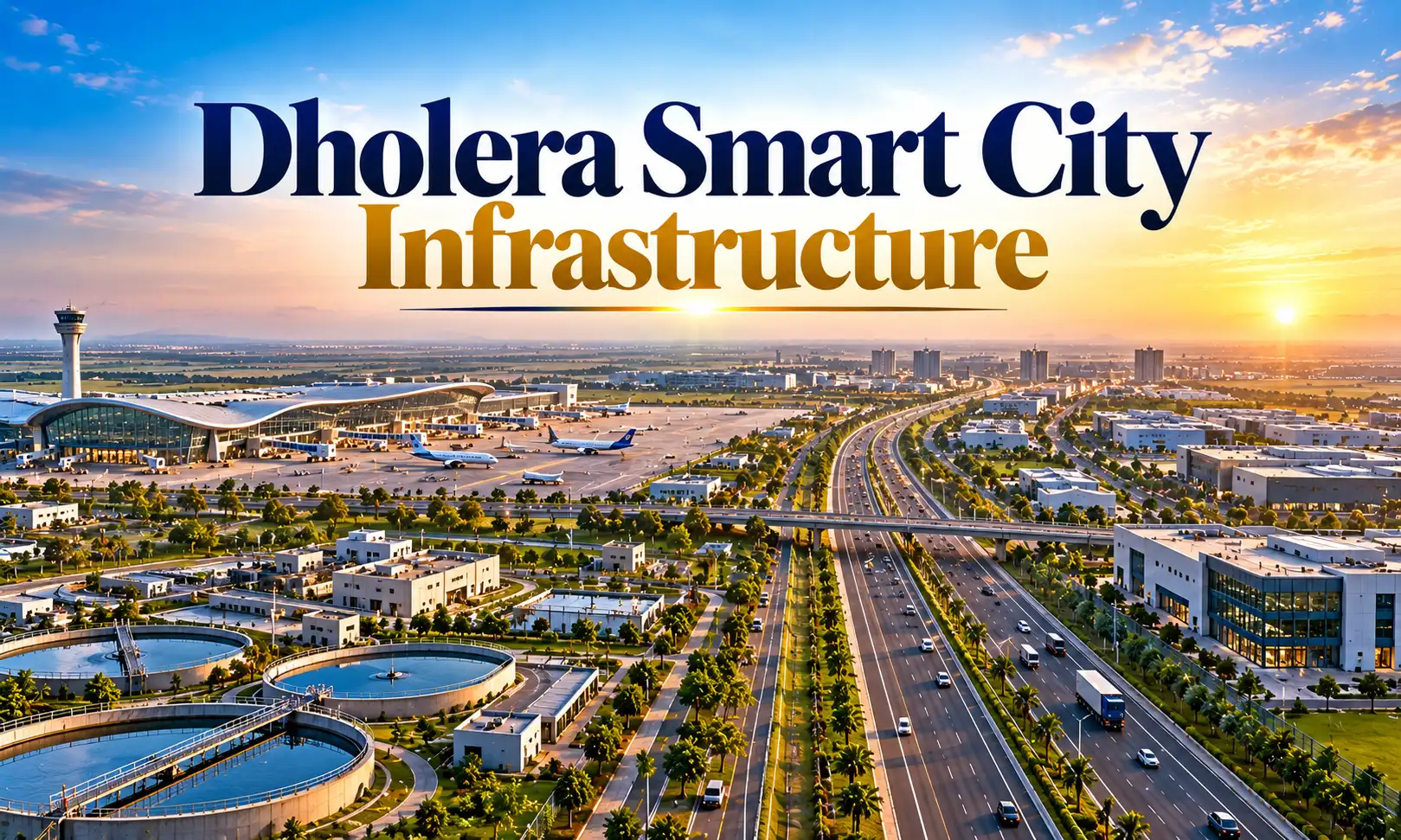

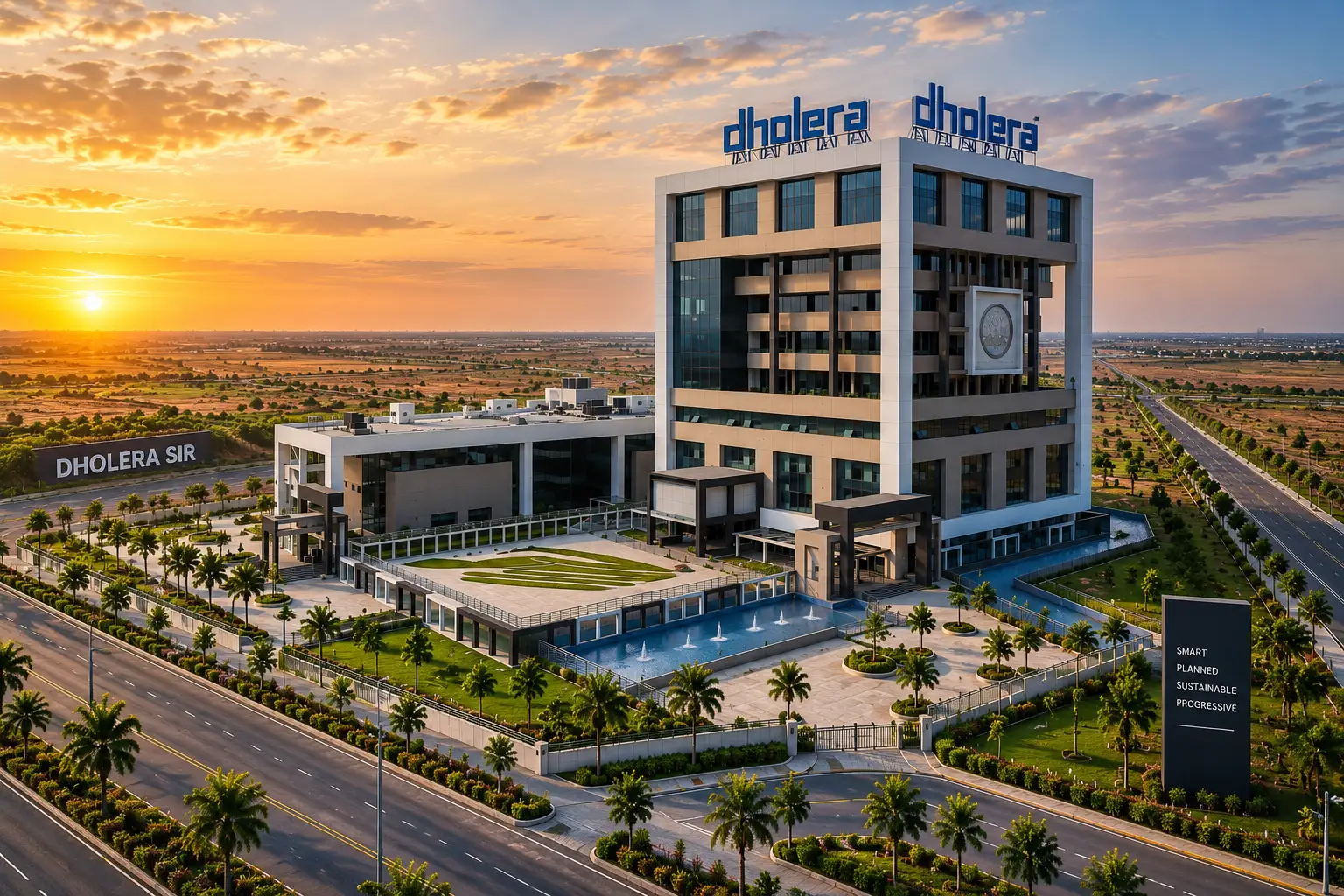
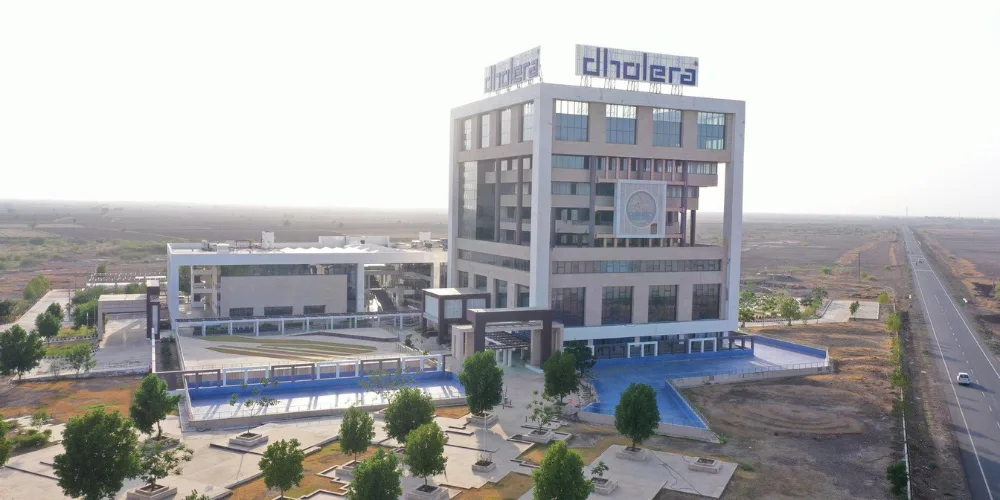
Drive into the Activation Area and one structure interrupts the flat Gujarat horizon before anything else does. The ABCD Building Dholera — the Administrative and Business Centre for Dholera — was the region’s first major completed project, and it remains the one place where the entire smart city is planned, watched and approved. Here is what actually happens inside it, and why anyone tracking Dholera updates should care.
One Building, Three Jobs
Most government offices do one thing. This one does three.
It is an administrative headquarters, housing the DSIR administration and the development authority offices that run Dholera SIR. It is a technology command centre, monitoring the city’s utilities minute by minute. And it is a business venue, with conference space, banquet facilities and an auditorium built for investor meetings and MoU signings.
Stacking all three inside one campus was a deliberate choice. In a greenfield region with no legacy infrastructure, concentrating governance, operations and hospitality in a single address removes friction for everyone who has to be there.
The Address That Sets the Pace
The building sits in TP2 West, Phase 1 of the Activation Area — the 22.5 sq km zone where Dholera’s first development wave is concentrated. A 55-metre-wide arterial road runs past the site and feeds directly into the expressway network.
That matters practically. The Ahmedabad–Dholera Expressway, the Central Spine Road, the airport road and the industrial plots now being allotted are all within a short drive. An investor can inspect land, meet officials and review approvals in a single morning — something that is rarely possible on a project of this scale.
Behind the Glass: The CIOC Screens
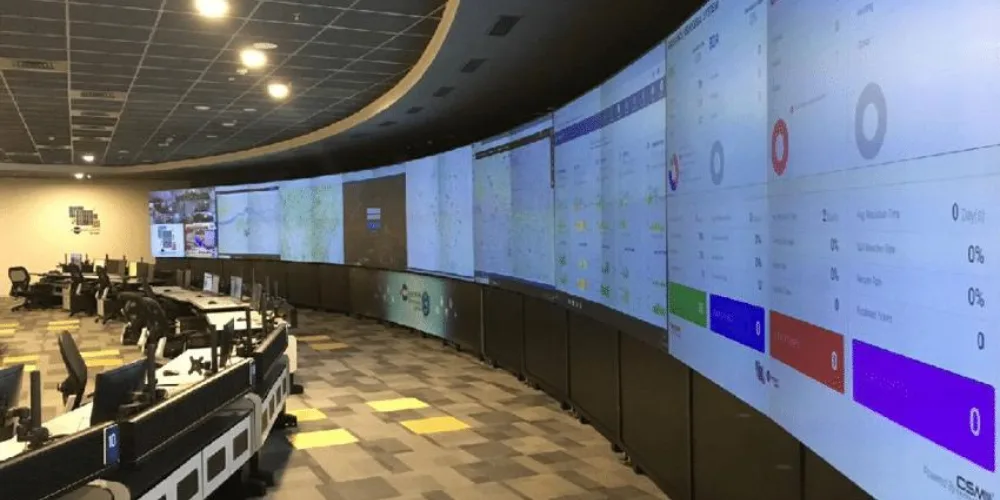
The City Integrated Operations Centre is the reason Dholera can call itself a smart city without stretching the term.
A wall of live dashboards tracks power distribution, water supply, drainage, street lighting, traffic movement and surveillance across the region, fed by sensors and SCADA systems buried in Dholera’s underground utility corridors. Faults surface before residents report them. Consumption is measured, not estimated. Emergency response runs from one desk.
Most Indian cities retrofit this kind of oversight decades after they are built. Dholera installed the nervous system first and is now growing the city around it.
The Ground Floor Sells the City
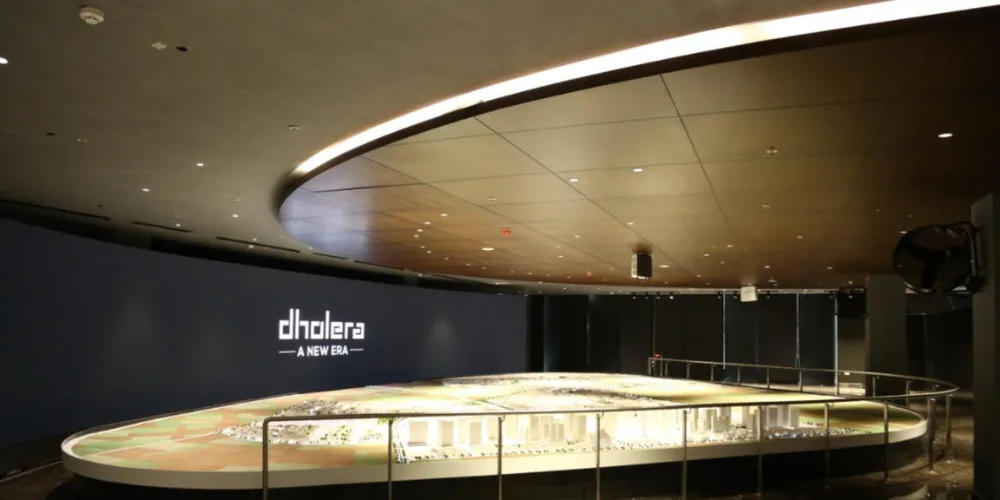
Walk in at ground level and you reach the Experience Zone.
A large physical scale model of the region sits at the centre, ringed by interactive displays, projection mapping and audio-visual walkthroughs explaining the master plan, the phasing and the industrial clusters. For visiting delegations and first-time buyers, this is usually the moment a 920 sq km abstraction turns into something you can point at.
It is the single most visited part of the building, and almost every official site tour ends here.
Where Deals Actually Get Signed
The ABCD Building also carries a banquet hall, a full auditorium and an international restaurant, plus conference rooms and dedicated office floors for the DSIR administration.
In a region still building out its hotel inventory, that combination is more useful than it looks. Companies can present to officials, hold board discussions, sign agreements and host guests without leaving the campus. Government summits, training programmes and corporate delegations all run from here.
The Paperwork Advantage
Then there is the quiet feature that decides whether industrial projects move: single-window clearance.
Legal approvals, permissions, NOCs and documentation for businesses entering Dholera SIR are routed through this building rather than scattered across departments in different cities. Investor facilitation desks walk companies through land allotment and compliance from one counter. For a manufacturer weighing Dholera against alternatives, that shortens the timeline between decision and groundbreaking.
The structure itself was built to green-building standards — efficient lighting, water conservation systems and sustainable materials — consistent with the solar park and smart grid supporting the wider region.
Reading the Building as a Progress Report
Be clear about what the ABCD Building does and does not do. It does not set land prices in Dholera SIR. What it does is prove that the administrative machinery behind the region is live.
Read alongside the rest of the 2026 picture — the operational Ahmedabad–Dholera Expressway, the completed airport runway, the Tata Electronics semiconductor fab and the approved semi-high-speed rail corridor — it belongs to a pattern of delivered infrastructure rather than announced intentions. That pattern is the honest due diligence for any plot buyer.
Sunk infrastructure cannot be reversed. The ABCD Building was the first piece of it, and it has been running ever since.
Planning a visit? Entry is generally permitted with prior permission or during scheduled investor sessions. Combine it with a drive along the Central Spine Road for the clearest view of where Dholera stands today.