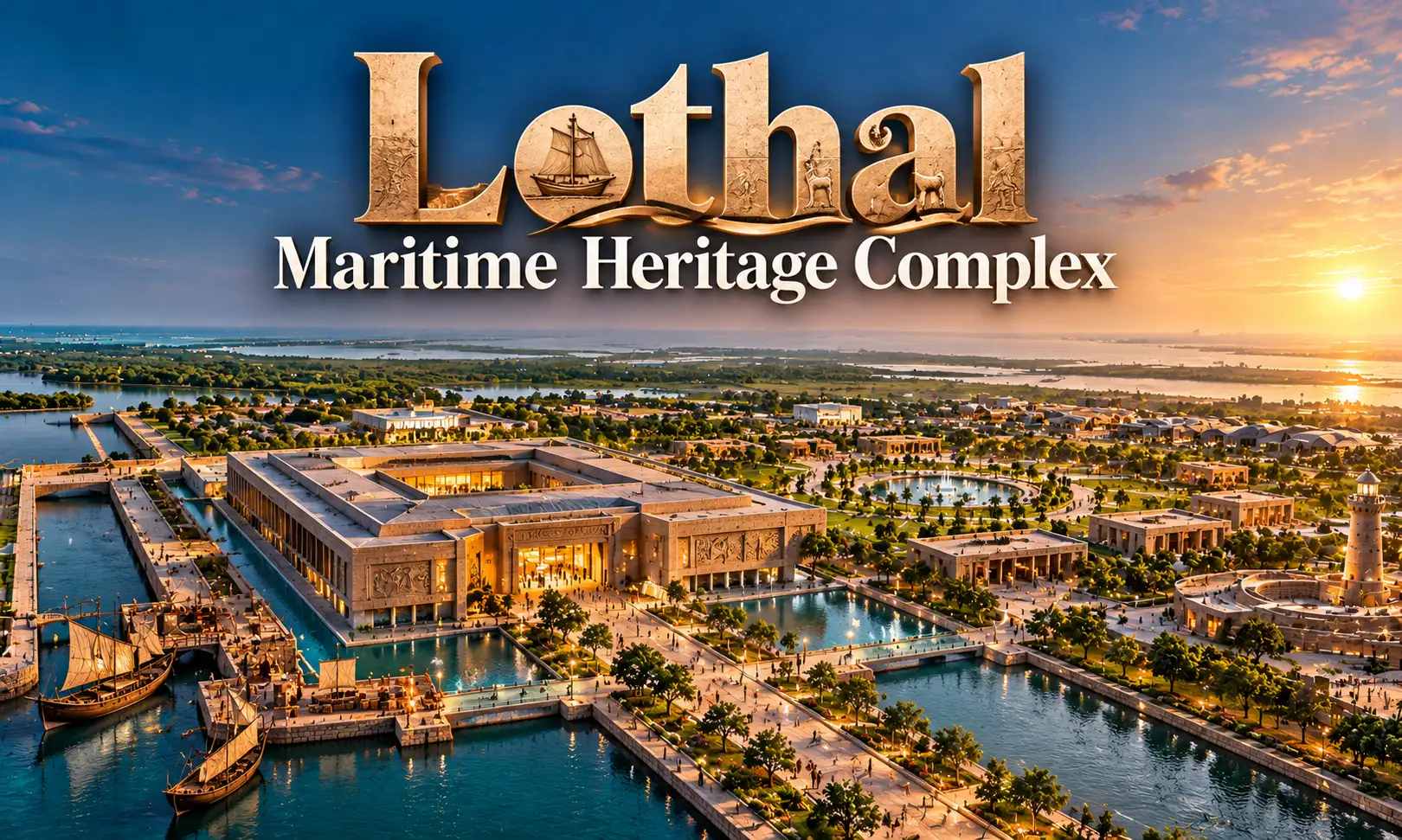

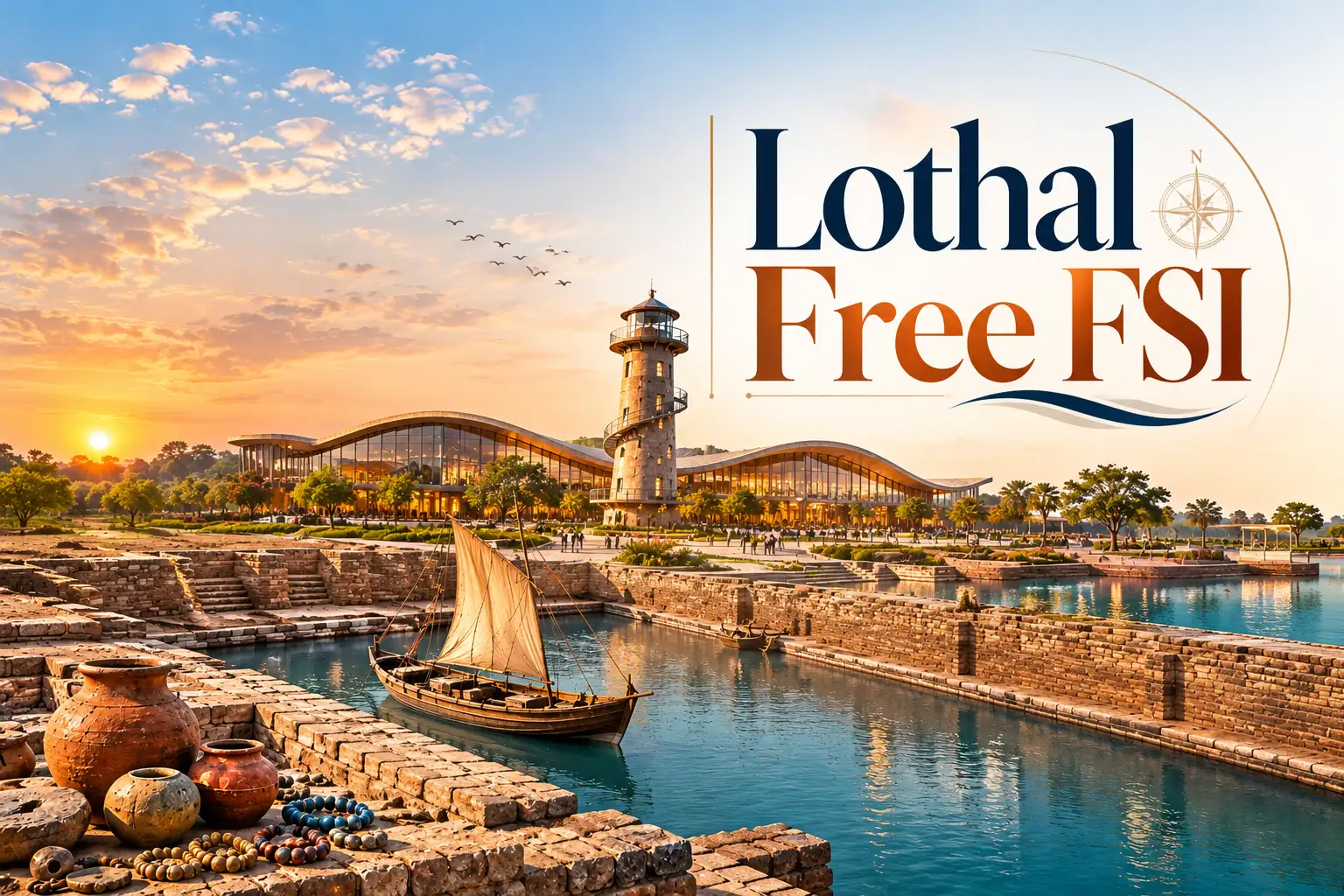
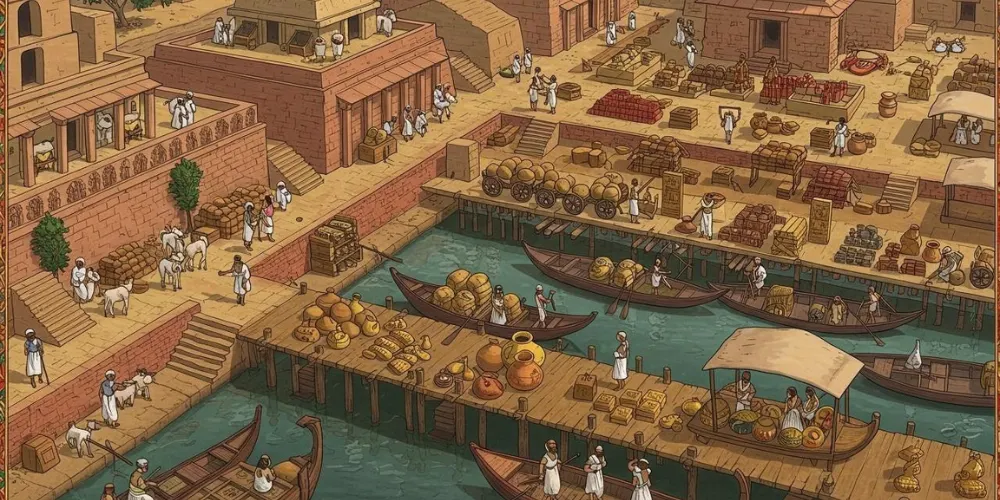
Around 4,500 years ago, Lothal was one of the busiest ports of the Harappan world. Boats loaded with beads, cotton and copper sailed from its dockyard to distant lands.
Today, Gujarat wants Lothal to welcome a new kind of traffic: tourists, travellers and investors.
The state government has announced a free Floor Space Index (FSI) for five years, running until 2031. The goal is simple. Make it easier and cheaper for private players to build hotels, resorts and visitor facilities around the upcoming National Maritime Heritage Complex.
Here is what the Lothal free FSI policy means and why it matters.
What Is Free FSI and Why Does It Matter?
FSI decides how much built-up area a developer can construct on a plot of land. Normally, building beyond the basic limit means paying a premium to the authorities.
Under the new policy, that extra charge goes away for five years in eligible areas.
For investors, this lowers project costs in a big way. A hotel chain can build more rooms on the same land without paying additional fees. A resort developer can plan larger facilities from day one.
The message from the government is clear. Come early, build now, and save money.
The Heritage Complex Driving the Change
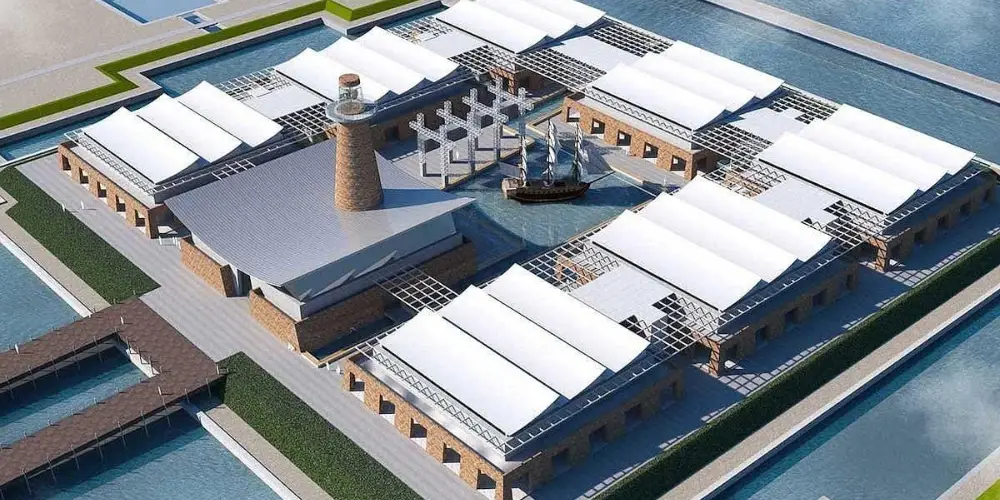
The policy is closely tied to the National Maritime Heritage Complex coming up at Saragwala village in Dholka taluka.
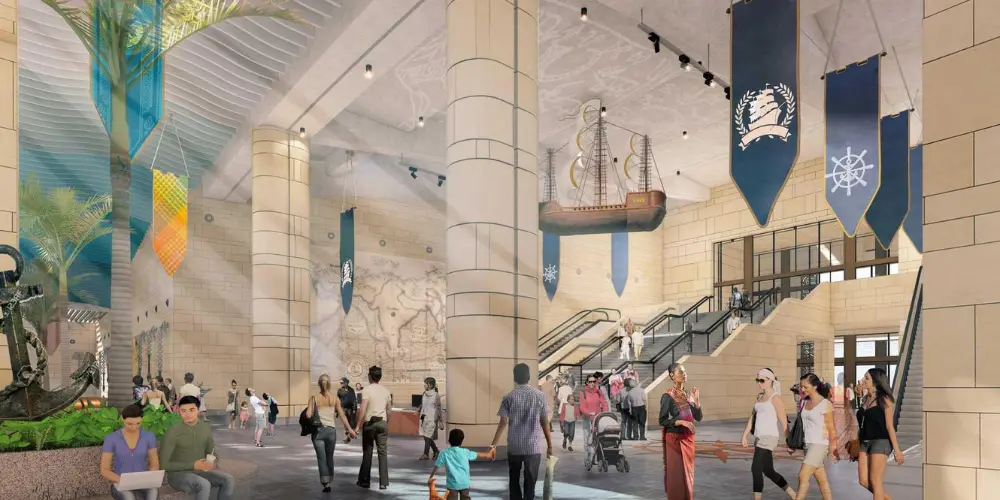
The complex is designed to tell the story of India’s long seafaring history, from Harappan traders to modern shipping. Once ready, it is expected to draw large numbers of domestic and international visitors.
But a world-class attraction needs world-class support around it. Visitors need places to stay, eat, shop and relax. Right now, the area lacks that infrastructure.
The free FSI offer is meant to fill this gap before the crowds arrive.
Three Zones, Three Different Rules
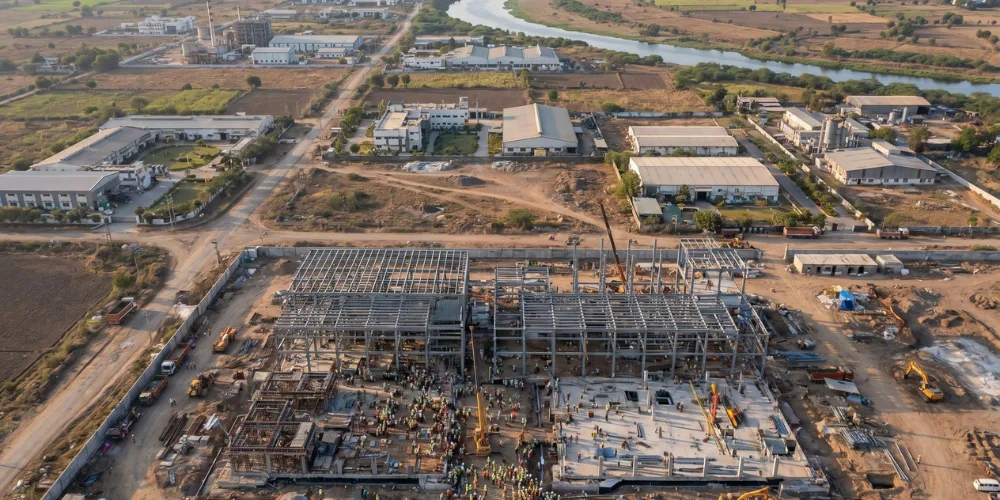
Gujarat is not opening the entire region to unchecked construction. Instead, the plan divides the land into clear zones, each with its own purpose.
The Restricted Zone surrounds the ancient dockyard itself. Here, no new construction is allowed within a fixed radius. The aim is to protect the archaeological remains from damage and visual clutter.
The Buffer Zone sits just beyond. Building is permitted, but with strict height limits and design controls. This keeps the skyline low and preserves the character of the heritage site.
The Hospitality Zone is where development is actively encouraged. Higher FSI is allowed, and this is where most new projects are expected to come up.
This layered approach tries to balance two goals that often clash: growth and preservation.
What Can Be Built in the Hospitality Zone?
The hospitality zone has been planned with a wide mix of visitors in mind.
Proposed projects include:
- Luxury resorts for premium travellers
- Budget hotels for families and students
- Cultural theme parks built around Harappan history
- Eco-tourism clusters that use the natural landscape
- Handicraft centres showcasing local artisans
This variety matters. A heritage destination succeeds when it serves school groups, history lovers, weekend travellers and international tourists alike.
The handicraft centres could also open new income streams for nearby villages, linking tourism growth directly to local livelihoods.
LADA: One Authority for the Whole Region
To manage all of this, the government has set up the Lothal Area Development Authority (LADA).
LADA covers about 166.88 sq. km around the heritage site. It will handle planning, approvals and development across this region.
Having a single dedicated authority helps in several ways. Investors get one point of contact. Planning stays consistent across zones. And heritage protection rules are enforced in one place rather than scattered across departments.
For a project of this scale, that kind of coordination is essential.
What This Means for Investors and Locals
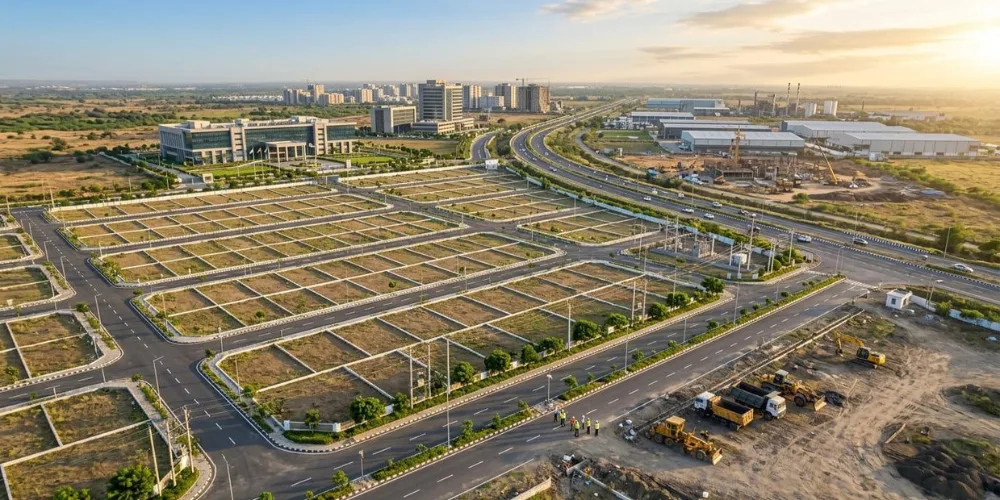
For hospitality and real estate players, the timing looks attractive. Lower construction costs, a protected heritage anchor and a growing tourism plan create a strong case for early entry.
For local communities, the plan could bring jobs in construction, hotels, transport, guiding and crafts. Small businesses such as eateries and homestays may also benefit as footfall rises.
There are open questions too. Infrastructure like roads, water supply and connectivity will need to keep pace. And strict enforcement of the restricted and buffer zones will be key to protecting the site that makes Lothal special in the first place.
The Bigger Picture
Lothal is not just another tourist spot. It is one of the oldest known dockyards in the world and a symbol of India’s early maritime strength.
By pairing the heritage complex with investor-friendly rules and clear zoning, Gujarat is trying to create a destination that is both profitable and protected.
If the plan works, Lothal could once again become a busy hub, this time for travellers rather than traders.
FAQs
It is a Gujarat government scheme that waives extra FSI charges for five years, until 2031, to attract tourism and hospitality investment around Lothal.
It is being built at Saragwala village in Dholka taluka, near the ancient Lothal site.
No. New construction is banned within a set radius of the dockyard, and the buffer zone has height and design restrictions.
Luxury resorts, budget hotels, cultural theme parks, eco-tourism clusters and handicraft centres.
The Lothal Area Development Authority, set up to plan and manage development across roughly 166.88 sq. km around the heritage site.