

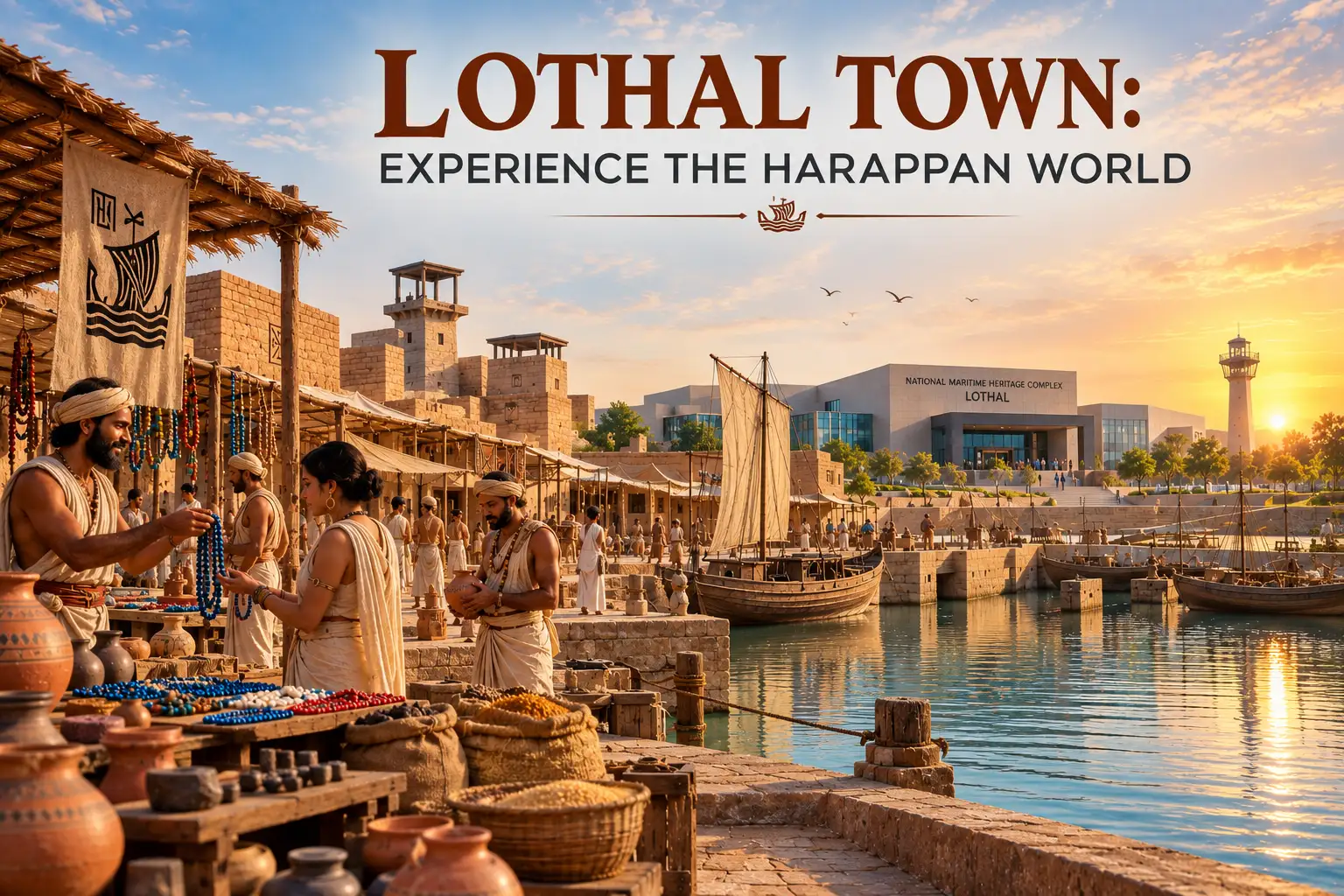
Imagine picking up a handful of beads and trading them for grain — no cash, no card, no price tag. That is the premise of the marketplace at Lothal Town, and it tells you everything about how this attraction thinks. The National Maritime Heritage Complex in Gujarat isn’t building another gallery about the Harappans. It is rebuilding a piece of their world and inviting you to spend a day inside it.
The Barter Marketplace Is the Big Idea
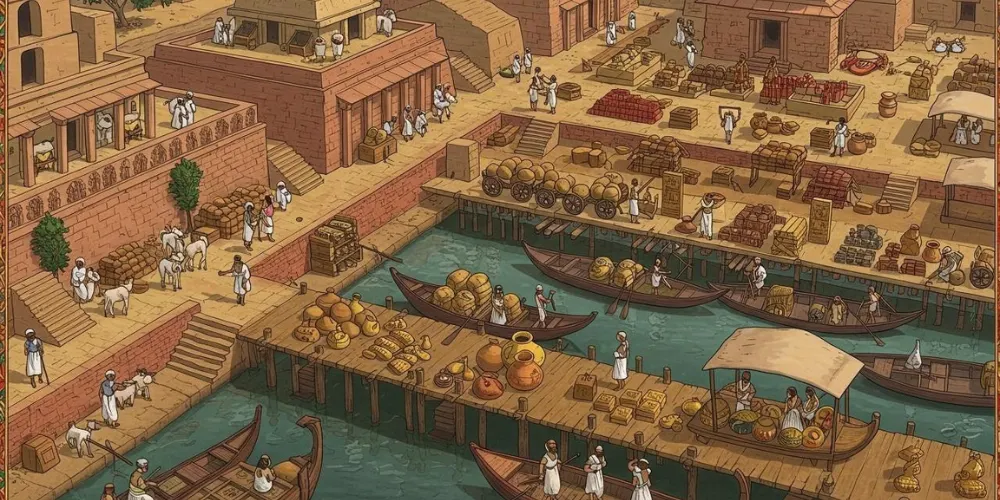
Long before coinage reached the subcontinent, Harappan traders moved goods across a network that touched Mesopotamia, Oman, Egypt and the Persian Gulf. They did it without money. Lothal Town’s marketplace recreates exactly that.
- Goods are exchanged the old way, with no medium of exchange involved
- Recreates a functioning society that existed entirely without currency
- Converts economic history into something you do, not something you read
- A natural draw for school groups, families and curious travellers alike
It’s an unusually smart bit of museum thinking — the lesson is built into the transaction rather than printed on a panel beside it.
Ancient Houses, Streets and Town Planning, Rebuilt
The town recreates key maritime features drawn from the architecture and urban planning of three Harappan sites, replicating the houses, streets and markets of those ancient settlements.
- Grid-planned streets that reflect genuine Harappan layouts
- Replicated residential structures and market frontages
- Proportions and scale you understand by walking, not by diagram
- Visual continuity with the real Lothal excavation nearby
Harappan cities are famous for standardised brickwork, orderly streets and sophisticated drainage. Lothal Town puts that reputation back on its feet at ground level.
Built Around Water, Echoing the Old Dock
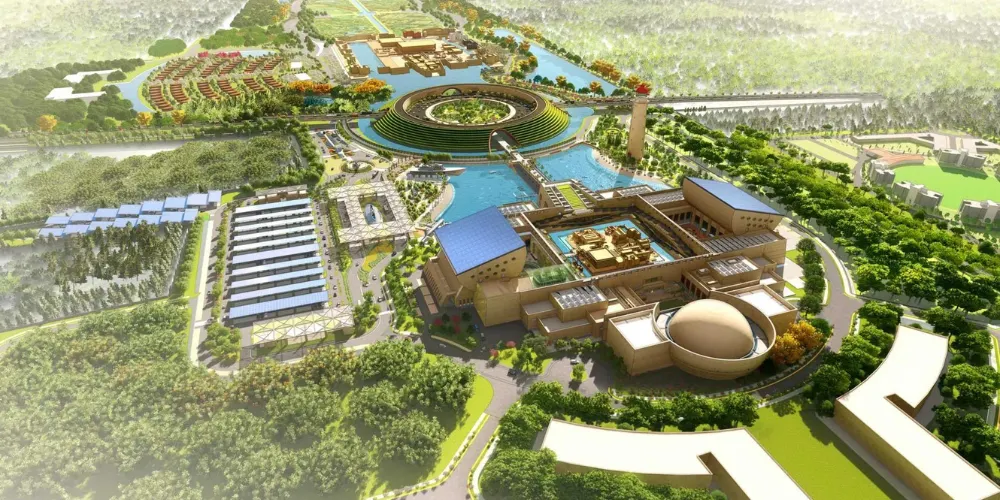
Lothal Town occupies the central courtyard of the NMHC museum and is ringed by a water body designed to evoke the ambience of the ancient Lothal dock — the site of what is widely regarded as the earliest known man-made dockyard.
- Sits at the physical centre of the museum complex
- Encircled by water that mirrors the historic dock setting
- Gives the reconstruction a coherent maritime frame
- Ties the built town directly to Lothal’s seafaring identity
The water isn’t decoration. It’s the reason the town reads as a port rather than a generic village.
Evening Shows in the Gathering Space
A large gathering space anchors the town, created so visitors can sit back and take in evening performances staged within Lothal Town itself. After sunset, with light playing off the surrounding water, the mood shifts entirely.
- Dedicated open audience area at the heart of the settlement
- Evening shows programmed inside the town
- Dock-side atmosphere once darkness falls
- Turns a half-day museum stop into a full day-and-evening outing
Walkthroughs, Workshops and Food Stalls
The town is designed as an engaging, active space where visitors do things rather than simply look at them.
- Guided and self-paced walkthroughs of the reconstructed settlement
- Workshops rooted in Harappan crafts, trade and daily routines
- Food stalls integrated into the streetscape
- Market spaces doubling as live demonstration areas
Different visitors get different entry points — a solo traveller, a heritage group and a family with impatient children can all find their footing here.
Where Lothal Town Sits in the Larger NMHC Story
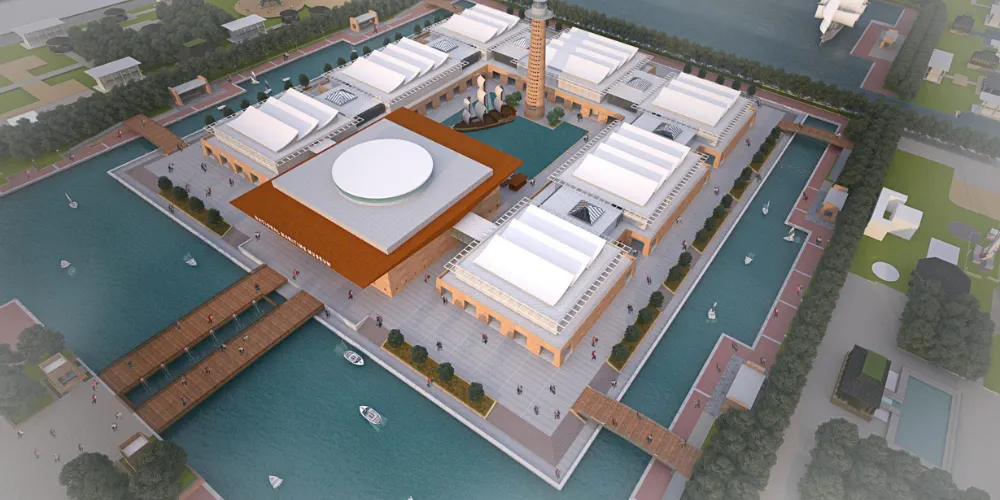
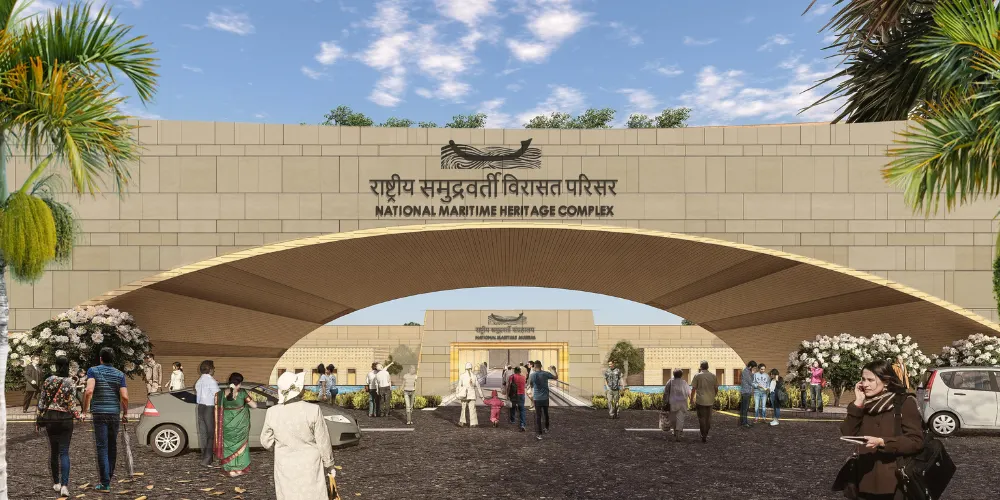
Lothal Town is one piece of a much bigger project. The National Maritime Heritage Complex is building fourteen galleries tracing India’s relationship with the sea, and the town gives that sweep a tangible anchor.
- Gallery 1 — Orientation and Oceanic Mythologies: ocean science, underwater archaeology and oceanic deities including Varuna, Ganga and Yamuna
- Gallery 2 — Harappans, the Pioneer Seafarers: Lothal’s excavated dockyard, Dholavira and international trade routes
- Gallery 3 — Post-Harappan trajectories and the impact of climate change
- Gallery 4 — India’s contact with the Greco-Roman world
- Gallery 5 — Special Exhibitions Gallery for rotating and collaborative shows
- Gallery 6 — Evolution of the Indian Navy and Indian Coast Guard
Outdoors, the campus holds the decommissioned INS Nishank, an IL-38SD aircraft, a Sea Harrier and boating facilities. Later phases add a 5D dome auditorium, a lighthouse museum, coastal state pavilions and themed parks.



Comments
Lothal Maritime Museum Near Dholera: Project, Phases & Impact
September 20, 2026[…] combination creates something Dholera did not have […]