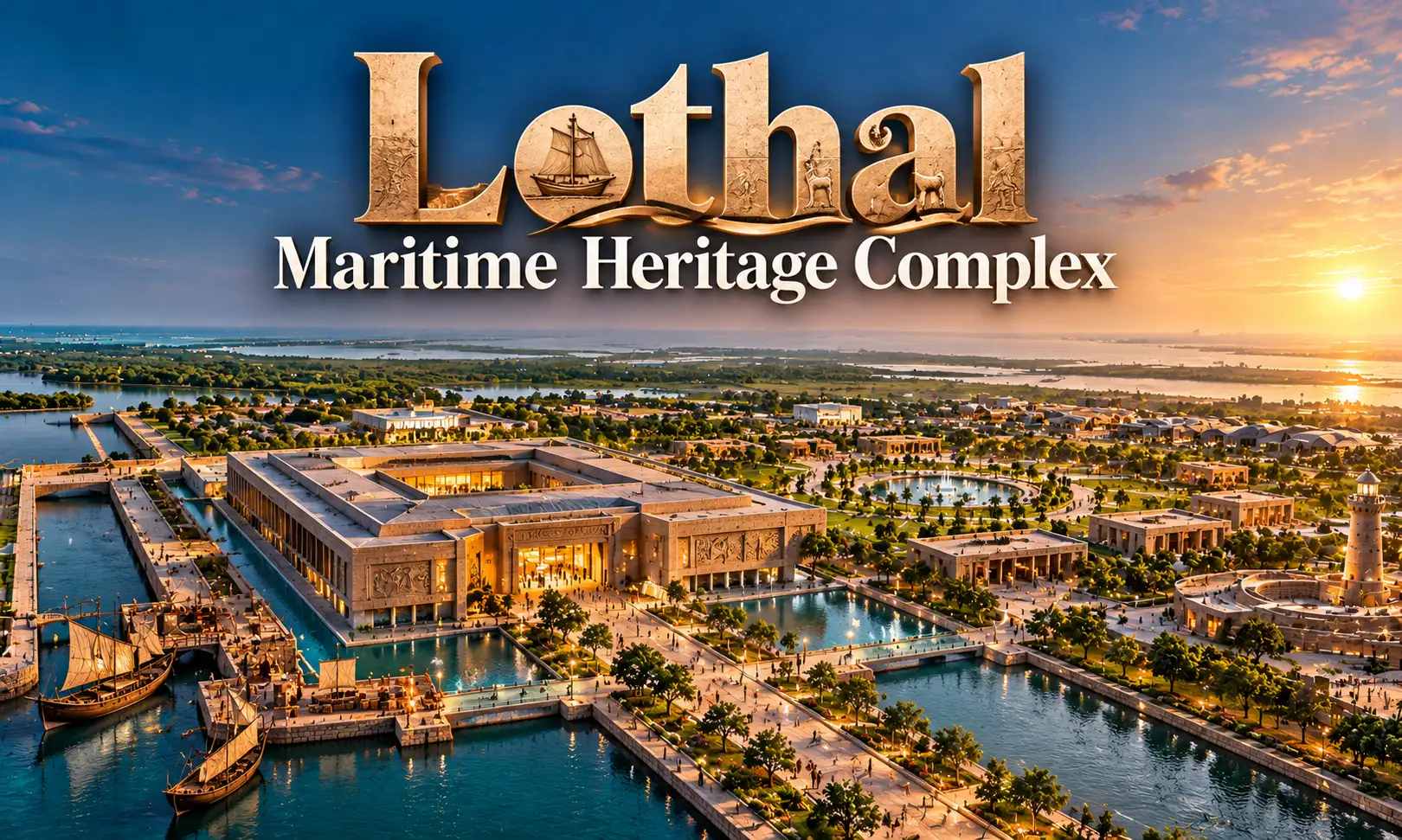

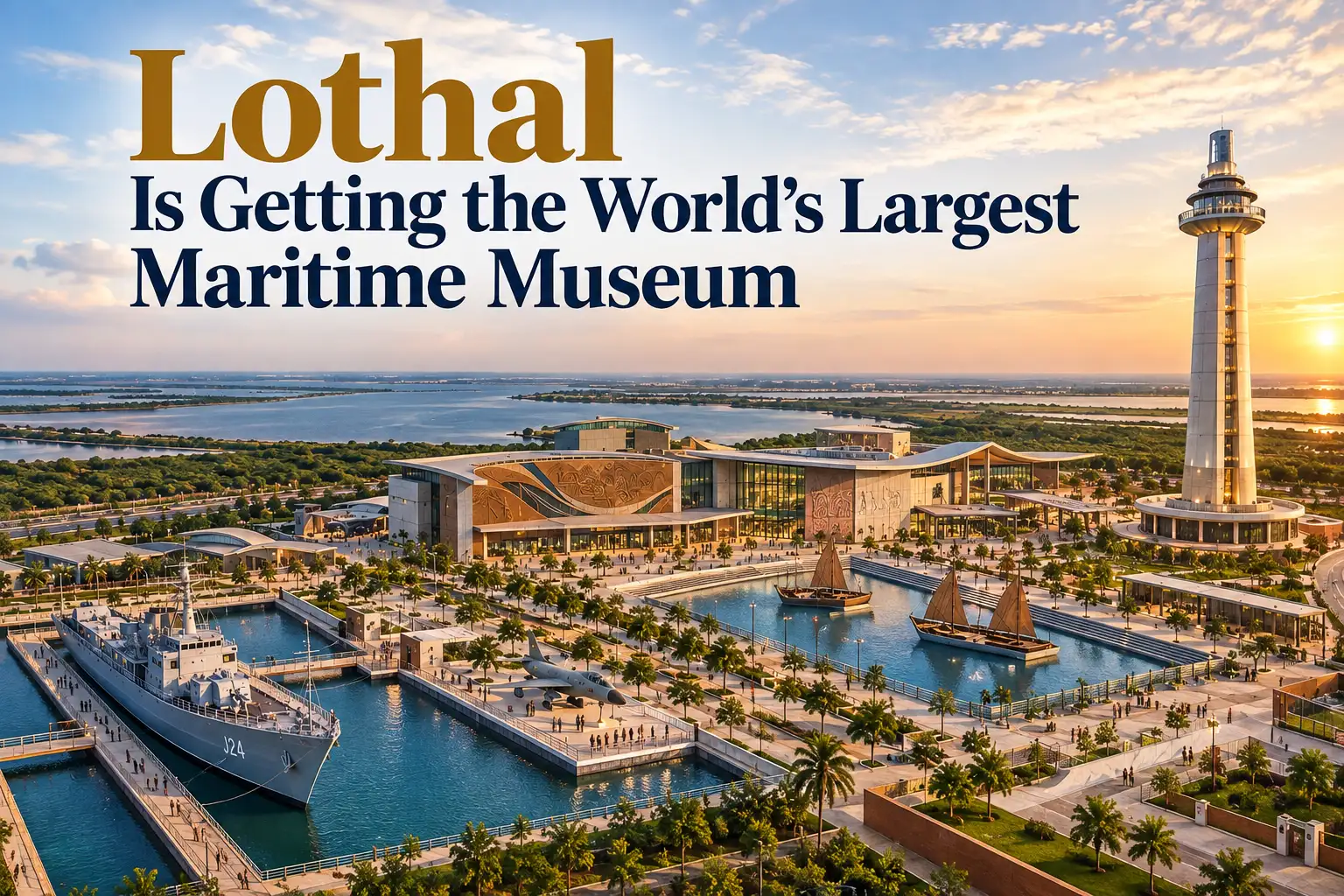
India is building one of the world’s largest maritime museum complexes at Lothal, Gujarat, on the site of what is believed to be the oldest known dockyard on earth. It covers more than 400 acres, carries a cost of around ₹4,500 crore, and sits a short drive from the Dholera Special Investment Region.
For visitors, it is a full-day heritage destination. For anyone watching Dholera’s growth, it is a second growth engine sitting alongside the semiconductor and industrial story.
Why the Location Matters Most
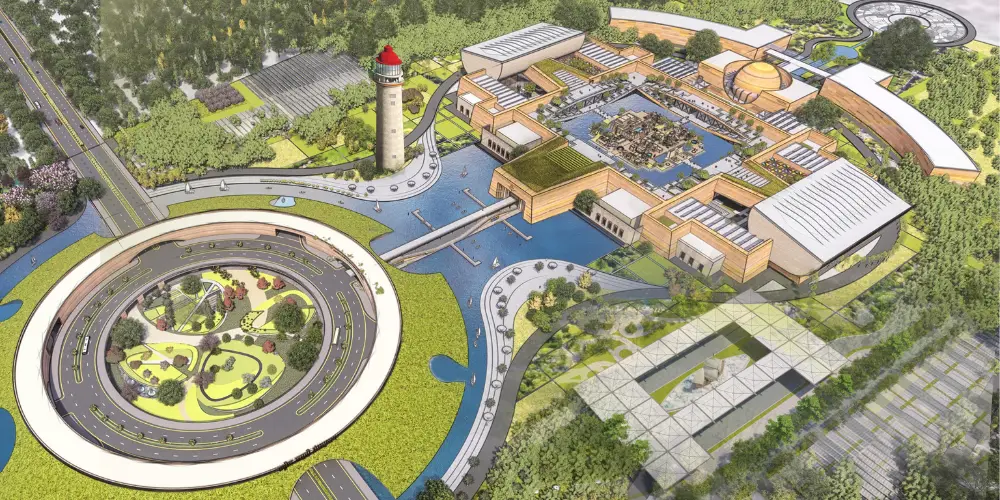
Start with geography, because that is what makes this project different from any other museum in India.
Lothal is roughly 85 km from Ahmedabad and sits within easy reach of Dholera SIR, India’s first greenfield smart city. The Ahmedabad–Dholera Expressway has already cut travel time across this belt, and the upcoming Dholera International Airport will cut it further.
That combination creates something Dholera did not have before:
- A weekend and day-trip tourism circuit anchored by a national-level attraction
- Demand for hotels, restaurants, retail and transport along the corridor
- A reason for non-industrial visitors to arrive in the region at all
- Continued public spending on roads, civic amenities and services
Industry builds a workforce. Tourism builds a city people actually visit.
What Is Being Built at Lothal
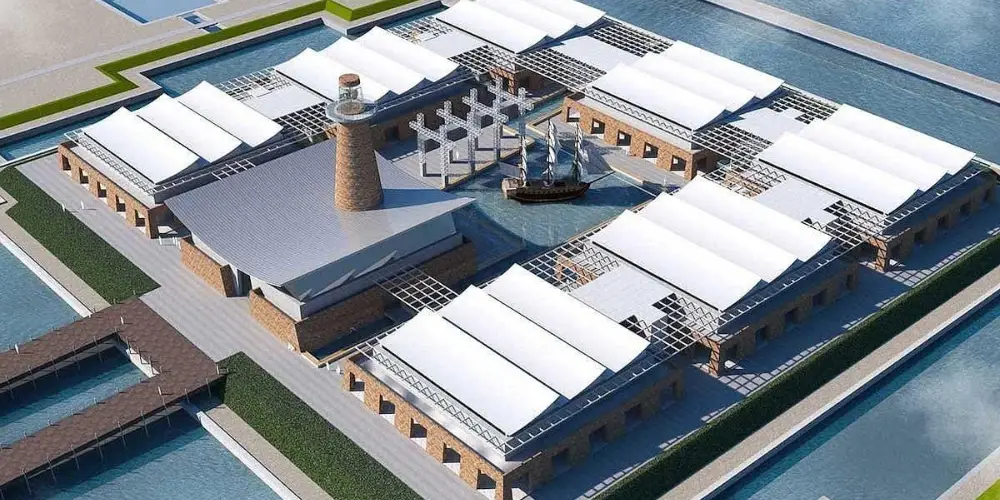
The official name is the National Maritime Heritage Complex, developed by the Ministry of Ports, Shipping and Waterways under the Sagarmala programme. The master plan is by architect Hafeez Contractor, and the first phase has been executed by Tata Projects.
Quick facts:
- Area: 400+ acres
- Cost: around ₹4,500 crore for the core project
- Galleries: fourteen planned across phases, from Harappan trade to the modern navy
- Expected footfall: up to 25,000 visitors a day once fully operational
- International participation: MoUs signed with countries including the Netherlands, Denmark, Germany, South Korea, the UAE, Portugal, Vietnam, Oman, Israel and Thailand
Inside the Complex
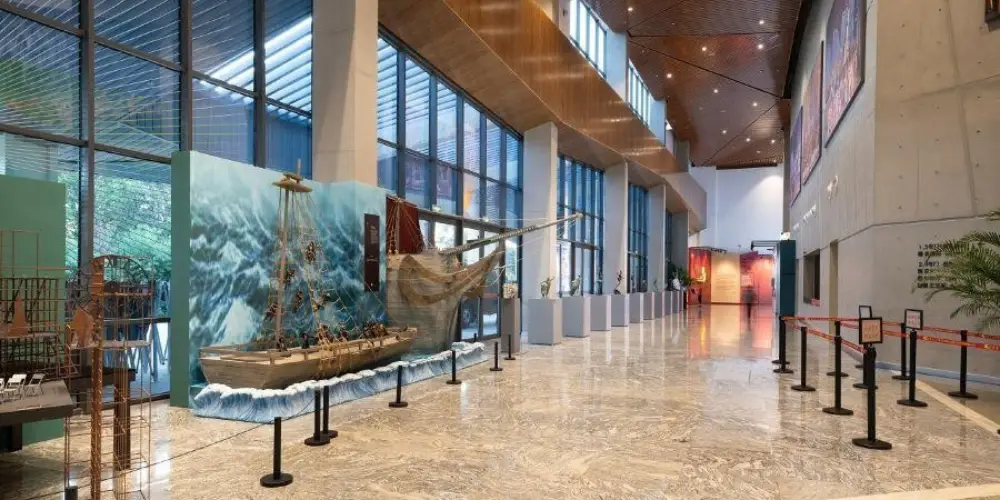
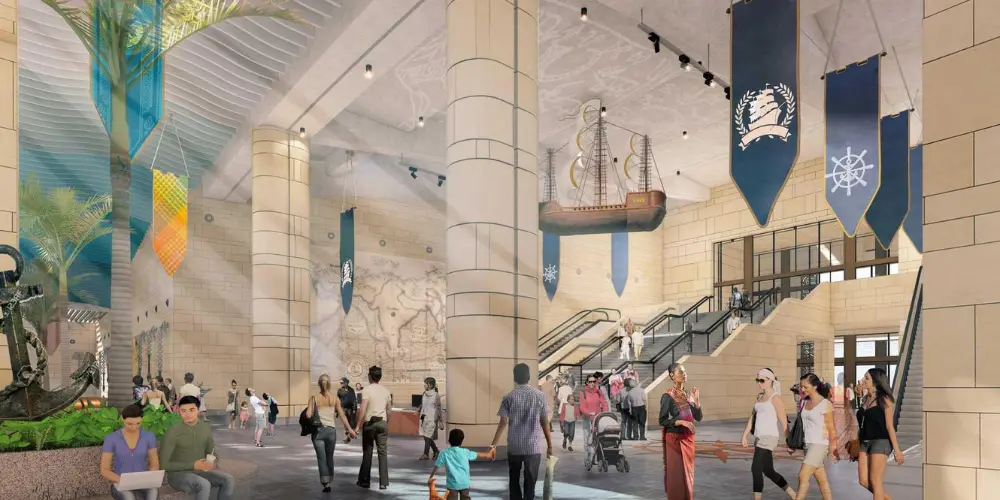
This is not a building full of glass cases. It is planned as an experience you walk through.
- Recreated Lothal township with Harappan-era streets, markets and civic spaces
- Maritime Heritage Museum tracing shipbuilding, navigation and trade
- Lighthouse Museum, planned as the tallest of its kind in the world
- Open aquatic gallery, envisaged among the largest globally
- Indian Navy and Coast Guard gallery, one of the biggest naval galleries in India
- Jetty walkway, coastal states pavilions, theme parks and an amphitheatre
Opening in Phases, Not All at Once
Worth knowing before you plan a trip.
Phase 1A covers six galleries, the recreated township, aquatic and common-area theming, the jetty walkway and Indian Navy artefacts. The Ministry has targeted July 2026 for completion.
Phase 1B adds roughly eight more galleries, the Lighthouse Museum, the Bageecha complex with parking and food halls, and a large dome theatre, at an additional cost of around ₹3,000 crore.
Phase 2 brings coastal states pavilions, a maritime institute, museum-themed hotels and eco resorts, and themed parks covering maritime, naval, climate and adventure themes.
The History Behind It
Lothal was excavated in 1953 by archaeologist S. R. Rao, and what emerged reset assumptions about ancient India. A brick-lined tidal basin, warehouses, a bead factory and a planned drainage system pointed to a town that understood tides, monsoon winds and long-distance trade.
Seals and artefacts recovered from the site link Lothal to the Persian Gulf and Mesopotamia. India’s maritime story did not start with colonial ports. It started here, around 4,500 years ago.
Visiting Lothal
- Distance: about 85 km from Ahmedabad, roughly two hours by road
- Best season: November to February
- Time needed: half a day for the archaeological site, a full day once the new complex opens
- Pair it with: Dholera SIR, Velavadar Blackbuck National Park, or Ahmedabad’s heritage circuit
The existing ASI site and museum are already open, so the historic dockyard can be seen today.
FAQs
Near Lothal in Ahmedabad district, Gujarat, about 85 km from Ahmedabad and close to Dholera SIR.
It is a major Indus Valley Civilisation site and is widely believed to have had the world’s earliest known dockyard.
In phases. Phase 1A has been targeted for July 2026, with 1B and Phase 2 to follow.
More than 400 acres, making it one of the largest maritime museum complexes anywhere.
Large tourism infrastructure generally supports long-term demand for land, hospitality and commercial space nearby, though outcomes depend on location, timing and proper due diligence.