

India’s semiconductor story just reached a defining moment. TATA Electronics, the Tata Group’s rapidly expanding electronics division, has joined hands with ASML, the Dutch lithography powerhouse, to accelerate its upcoming chip manufacturing facility at TATA Electronics in Dholera, Gujarat. Signed in The Hague with Prime Minister Narendra Modi present, this partnership stands as one of the biggest steps yet in India’s journey toward becoming a genuine player in global semiconductor manufacturing.
An $11 Billion Commitment Takes Shape
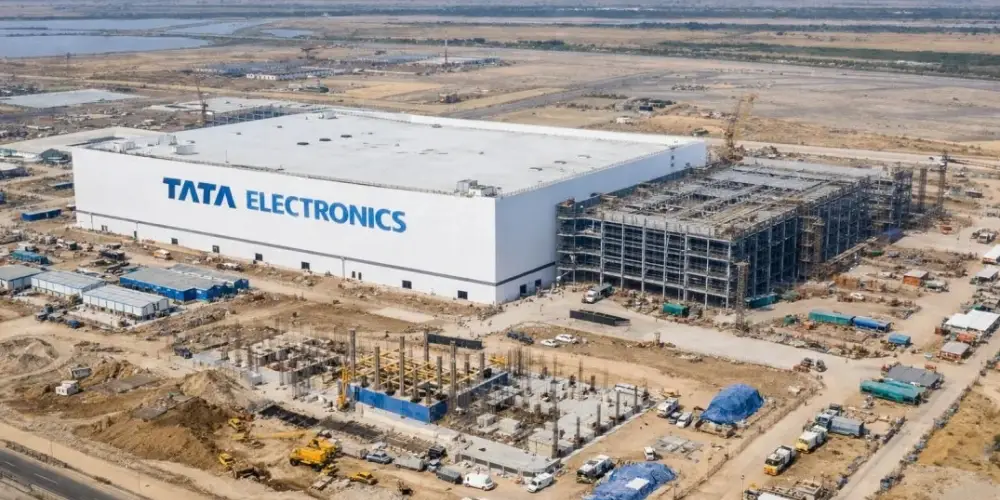
Central to this news is the TATA Electronics 91,000 crore investment ASML deal — worth close to $11-12 billion — aimed at establishing India’s first large-scale commercial semiconductor plant capable of processing 300mm (12-inch) wafers. Set up in Dholera, Gujarat, the plant is expected to churn out approximately 50,000 wafers monthly, targeting chips manufactured at nodes ranging from 28nm to 110nm.
This isn’t about producing the razor-thin 2nm or 3nm chips found in premium smartphones. Rather, the focus is on dependable, high-demand chips that quietly run the modern world — think automotive control systems, power management units, industrial sensors, telecom equipment, and everyday consumer electronics. Essentially, the plant is engineered to support the core infrastructure of manufacturing across sectors, not just flashy consumer tech.
Why Bringing ASML On Board Is a Big Deal
ASML isn’t a run-of-the-mill equipment vendor — it’s the undisputed global leader in lithography systems, the machines without which modern chip fabrication simply couldn’t happen. No competitor comes close to matching ASML’s scale or precision, which is exactly why its participation in the Dholera venture carries so much significance.
Through the newly inked Memorandum of Understanding, ASML will deliver its complete range of Advanced Chip Technology lithography systems and solutions to help get the Dholera fab up and running. But the collaboration goes well beyond equipment delivery. It also covers training programs to build local lithography expertise, initiatives to strengthen supply chain resilience, and investment in research and development infrastructure. The goal isn’t merely to set up a factory in India — it’s to cultivate the technical know-how needed to sustain and scale it for years to come.
Not Tata’s First Step Into Chipmaking
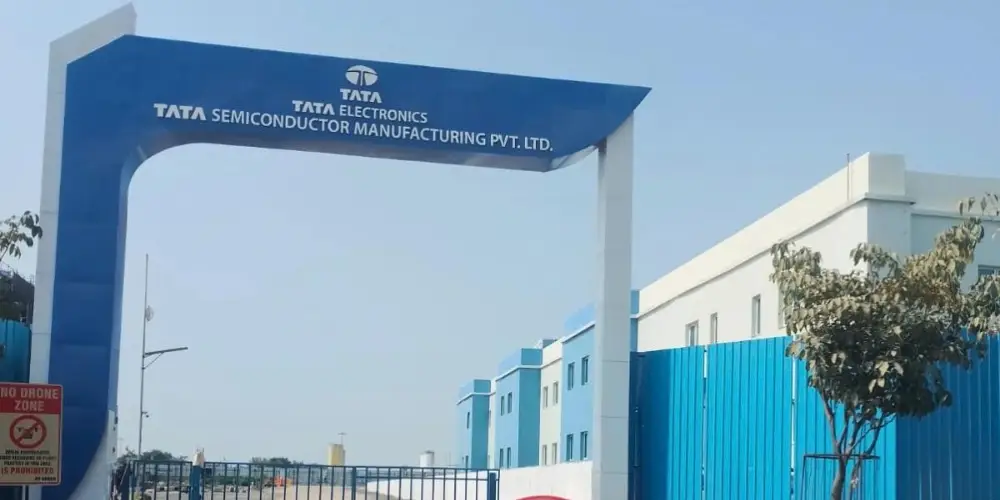
The Dholera project doesn’t stand alone — it builds on groundwork Tata Electronics laid earlier through a technology transfer agreement with Taiwan’s Powerchip Semiconductor Manufacturing Corporation (PSMC). That partnership gave Tata access to proven process technologies spanning 28nm, 40nm, 55nm, 90nm, and 110nm nodes. The ASML tie-up now adds the essential lithography equipment and technical backing needed to translate that knowledge into an operating fab. Combined with other efforts, including collaboration with Intel, Tata’s total semiconductor investment reportedly nears $14 billion.
What It Means for India’s Chip Ambitions
For years, India has held its own in chip design and assembly but lacked the capability to fabricate semiconductors domestically at meaningful scale. This project aims to close that gap. Industry voices have already praised the move — bodies like SEMI India and IESA have described the deal as a landmark development, one expected to speed up India’s learning curve in wafer fabrication while drawing further investment into the surrounding supplier network.
The ripple effects extend well beyond the factory walls. A fab of this magnitude requires an entire support ecosystem — suppliers, logistics networks, equipment servicing companies, employee housing, and commercial infrastructure. As construction progresses, Dholera is likely to see growing demand for industrial and residential development nearby, gradually establishing itself as a key semiconductor and manufacturing corridor in western India.
The Road Ahead
Construction at the Dholera site is already in motion, and this ASML partnership represents an important buildout milestone rather than confirmation of operational readiness — the real proof will come once the fab begins production. Even so, with a global technology leader like ASML now formally committed, and strong governmental support from both India and the Netherlands, the project carries considerable momentum.
If it delivers on its promise, TATA Electronics’ Dholera fab won’t just be another factory — it will become a cornerstone of India’s long-term ambition to establish itself as a reliable, self-sufficient force in the global semiconductor supply chain.