
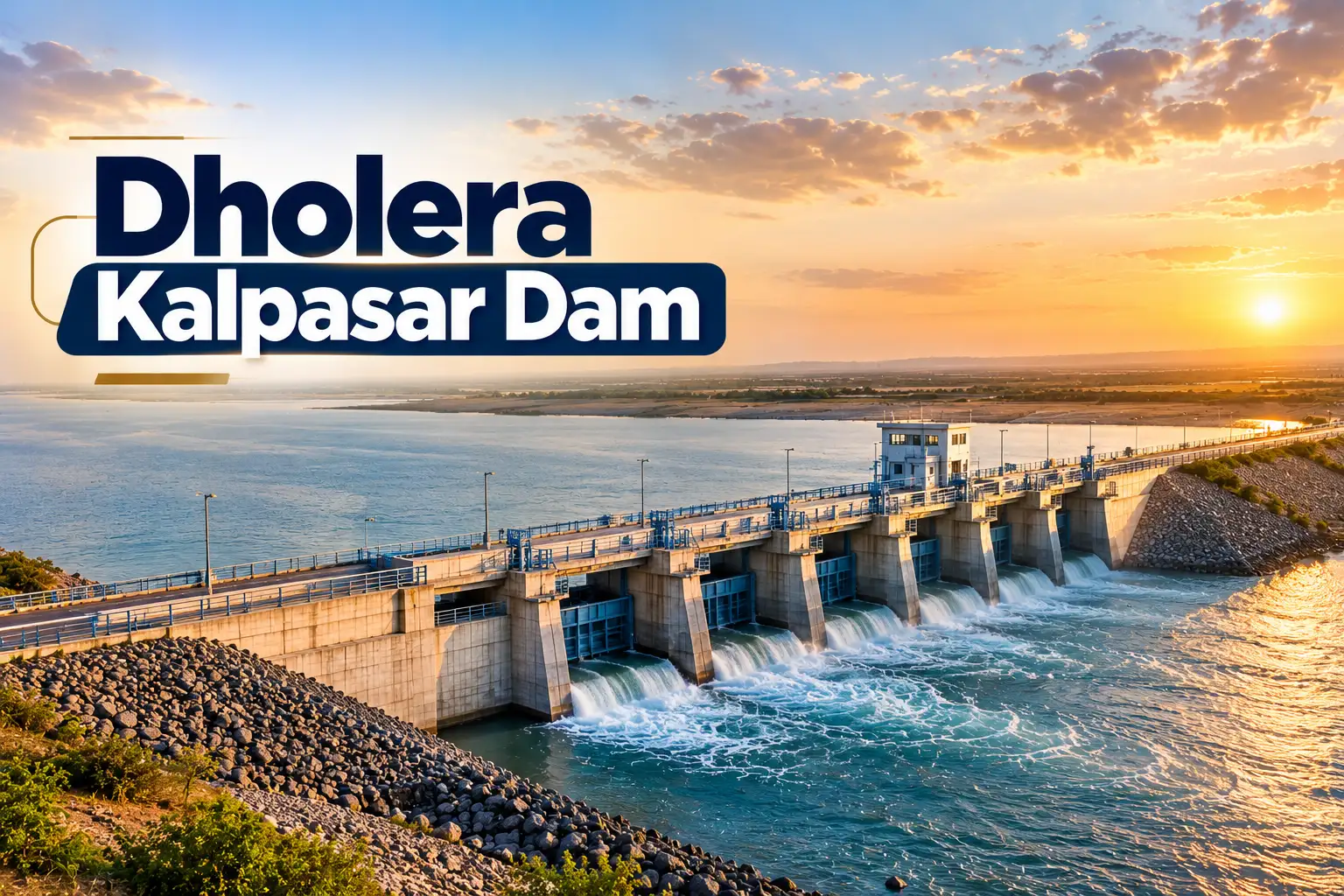
Gujarat is planning something few countries have tried: a dam across the sea. The Kalpasar project, officially called the Gulf of Khambhat Development Project, aims to turn part of the gulf into a giant freshwater lake.
For anyone tracking Dholera, this matters. The smart city sits on the same coastline, and a project of this size could change water supply, transport and investment across the whole region.
Here is a simple guide to the Kalpasar Dam, where it stands today, and what it could mean for Dholera Smart City.
What Is the Kalpasar Dam?
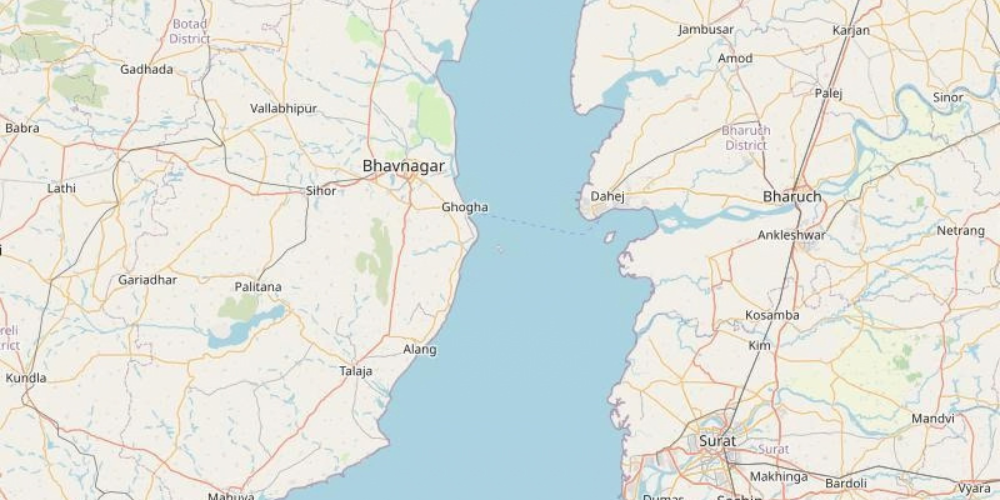
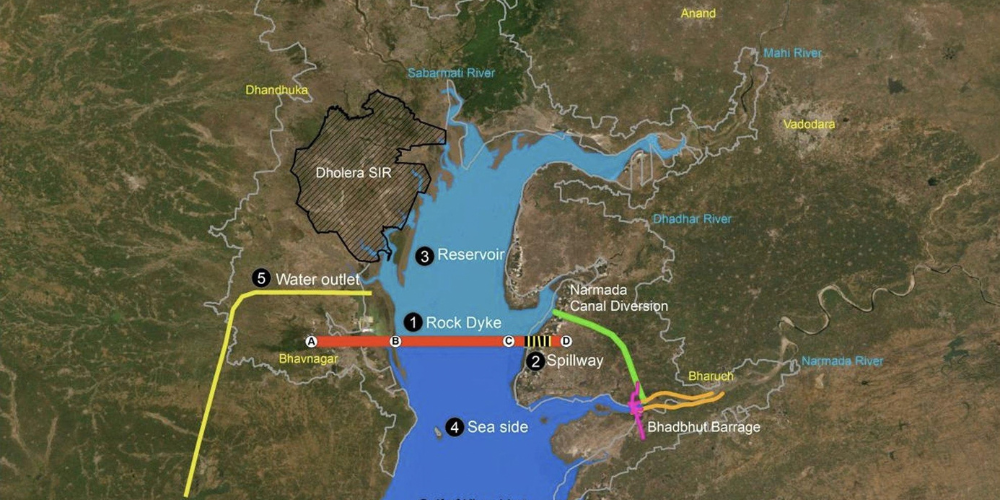
The Kalpasar Dam is a proposed 64-km dam across the Gulf of Khambhat in Gujarat. Behind it, a reservoir of about 2,000 sq km would collect freshwater instead of seawater.
That reservoir would be fed by four rivers: the Sabarmati, Mahi, Dhadhar and Narmada. Its planned gross storage is about 13,000 million cubic metres. That is more than the Sardar Sarovar dam, which holds about 9,460 million cubic metres.
If built, it would rank among the largest coastal freshwater reservoirs in the world.
Why Kalpasar Is in the News in 2026
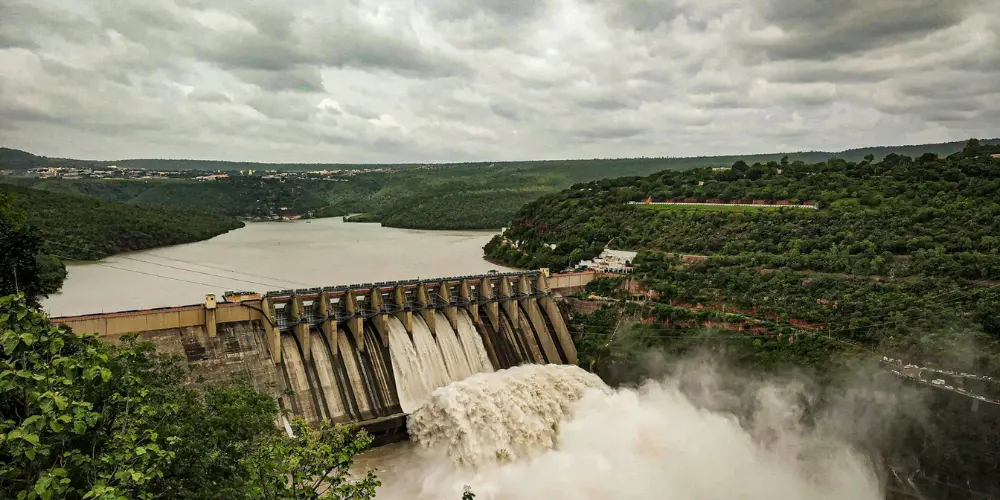
The project, first discussed decades ago, has gained fresh momentum this year.
The Centre told the Rajya Sabha that the Detailed Project Report (DPR) is at an advanced stage of finalisation. Then, on 24 September 2026, the Ministry of Jal Shakti signed two tripartite MoUs with the Netherlands during India International Water Week in New Delhi.
The partners are the Central Water Commission, Gujarat’s Kalpasar Department, and the Dutch institutions Deltares and TU Delft. The Dutch are world leaders in sea dams and land reclaimed from the sea, so their role adds technical weight.
Key Features at a Glance
The Kalpasar project is designed to do several jobs at once:
- Irrigation: about 10 lakh hectares across nine Saurashtra districts
- Drinking water: a steady freshwater source for water-scarce Saurashtra
- Clean energy: about 2,470 MW of hybrid renewable capacity on reclaimed land
- Connectivity: a highway-cum-rail corridor running over the dam
- Shorter travel: Bhavnagar to Surat cut from about 356 km to about 177 km
Part of the renewable power would be used to pump freshwater to coastal farms. This makes the project a water, power and transport scheme rolled into one.
The Dholera Connection: Why the Gulf Matters
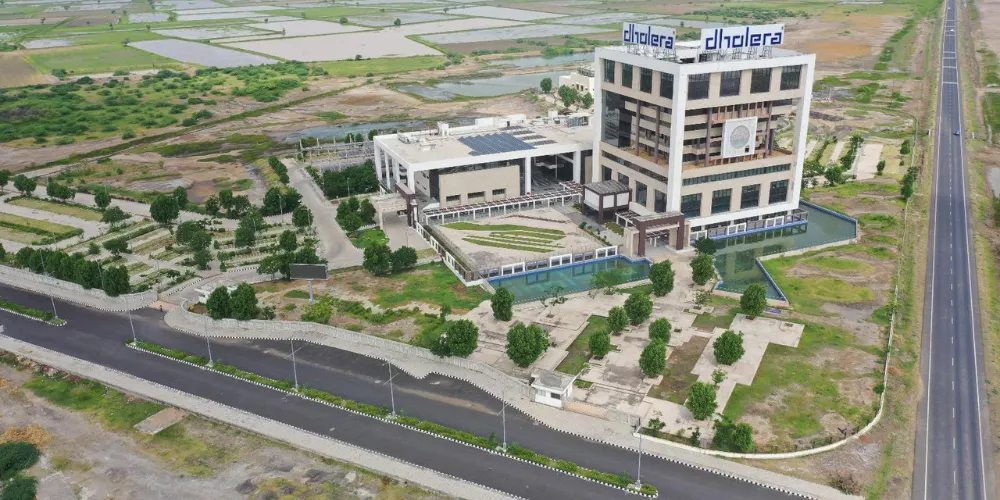
Dholera Special Investment Region (SIR) lies on the western shore of the Gulf of Khambhat. The Kalpasar reservoir would form in the upper gulf, the same waters that touch the Dholera coastline.
That shared geography is why the Kalpasar link keeps coming up in planning talks. When a region gets a new freshwater source, new roads and new power in one package, nearby growth centres tend to benefit first.
The city is already one of India’s flagship greenfield smart cities. It is part of the Delhi–Mumbai Industrial Corridor and is planned around large industrial, residential and logistics zones. Big infrastructure next door adds to that story.
How Kalpasar Could Support Dholera’s Growth
1. Water security
Industry needs reliable water. Semiconductor plants, solar manufacturing and large factories all use it in big volumes. A huge freshwater reservoir in the gulf could ease long-term water pressure across the region, including the smart city.
2. Faster links to South Gujarat
The road-cum-rail corridor over the dam would bring Saurashtra and South Gujarat much closer. Better links to Surat, Bharuch and the Dahej industrial belt could widen the city’s reach for trade, workers and supply chains.
3. Renewable power
The region already hosts major solar plans. Kalpasar’s 2,470 MW of hybrid renewable capacity would add to the clean-energy base of the wider region, which suits green industries looking at Dholera.
4. Investor confidence
Large projects signal long-term government focus. A Dholera Kalpasar Dam connection gives investors one more reason to watch the region over the next decade.
Challenges and Realistic Timelines
It is important to stay grounded. Kalpasar is still at the DPR stage, and no construction has started.
A dam across a tidal sea is a complex engineering task. The Gulf of Khambhat has some of the highest tides in India and heavy silt. Environmental impact, fisheries, coastal ecology and cost will all need careful study before approval.
Projects of this scale usually take many years from DPR to completion. So buyers should treat Kalpasar as a long-term plus, not an immediate driver.
What It Means for Dholera Property Buyers
For buyers and investors, the takeaway is simple. The city’s growth rests on its own base: the smart city plan, the expressway, the international airport project and industrial investment.
Kalpasar is a possible bonus on top of that. If the Dholera Kalpasar Dam story moves from paper to construction, it could strengthen the case for the whole gulf region.
Before investing, always check that a plot falls inside approved town-planning zones, verify title documents, and buy only from registered, transparent developers.
Conclusion
The Kalpasar Dam is one of Gujarat’s boldest ideas: a 64-km wall across the sea that creates a freshwater lake, clean power and a new transport corridor. With the DPR nearly final and Dutch expertise on board, it is closer to reality than ever before.
For Dholera, the project could mean better water security, faster links and a stronger investment story. Watch this space, but plan your Dholera decisions on what is already on the ground.
Frequently Asked Questions
It is a proposed 64-km dam across the Gulf of Khambhat in Gujarat to create a large freshwater reservoir for irrigation, drinking water, power and transport.
Yes. Dholera SIR lies on the western shore of the Gulf of Khambhat, and the reservoir would form in the upper gulf near the Dholera coastline.
No. As of 2026, the Detailed Project Report is at an advanced stage, and construction has not begun.
It could improve water security for the region, add renewable power and give faster road and rail access to South Gujarat.
The Netherlands is giving technical support through Deltares and TU Delft under MoUs signed in September 2026.