
What Changed in 2026
Start with the news, because 2026 moved Dholera from plan to place.
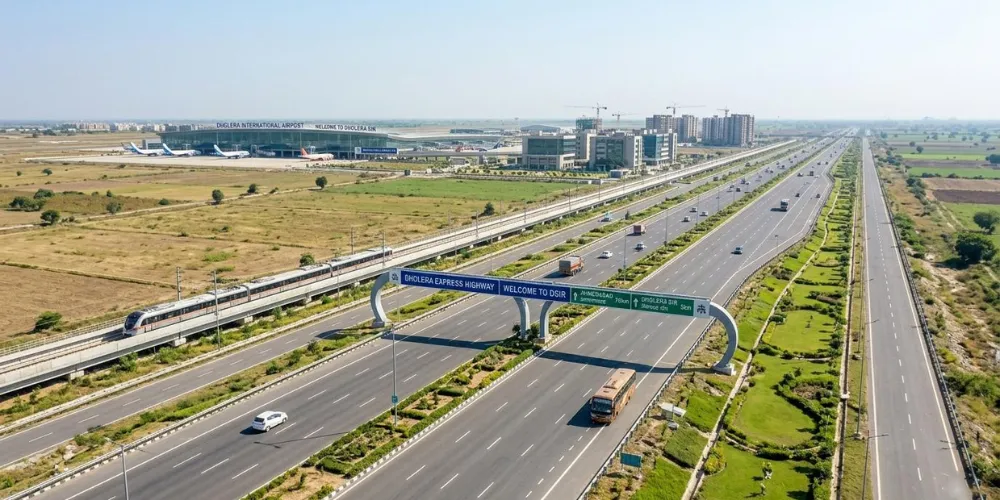
Expressway open. The Ahmedabad–Dholera Expressway is operational, cutting the drive from Ahmedabad to roughly 45 minutes to an hour.
Airport at 80%. Runway, taxiways and ATC tower are complete; the terminal is well advanced. Operations are targeted for the second half of 2026, subject to DGCA licensing.
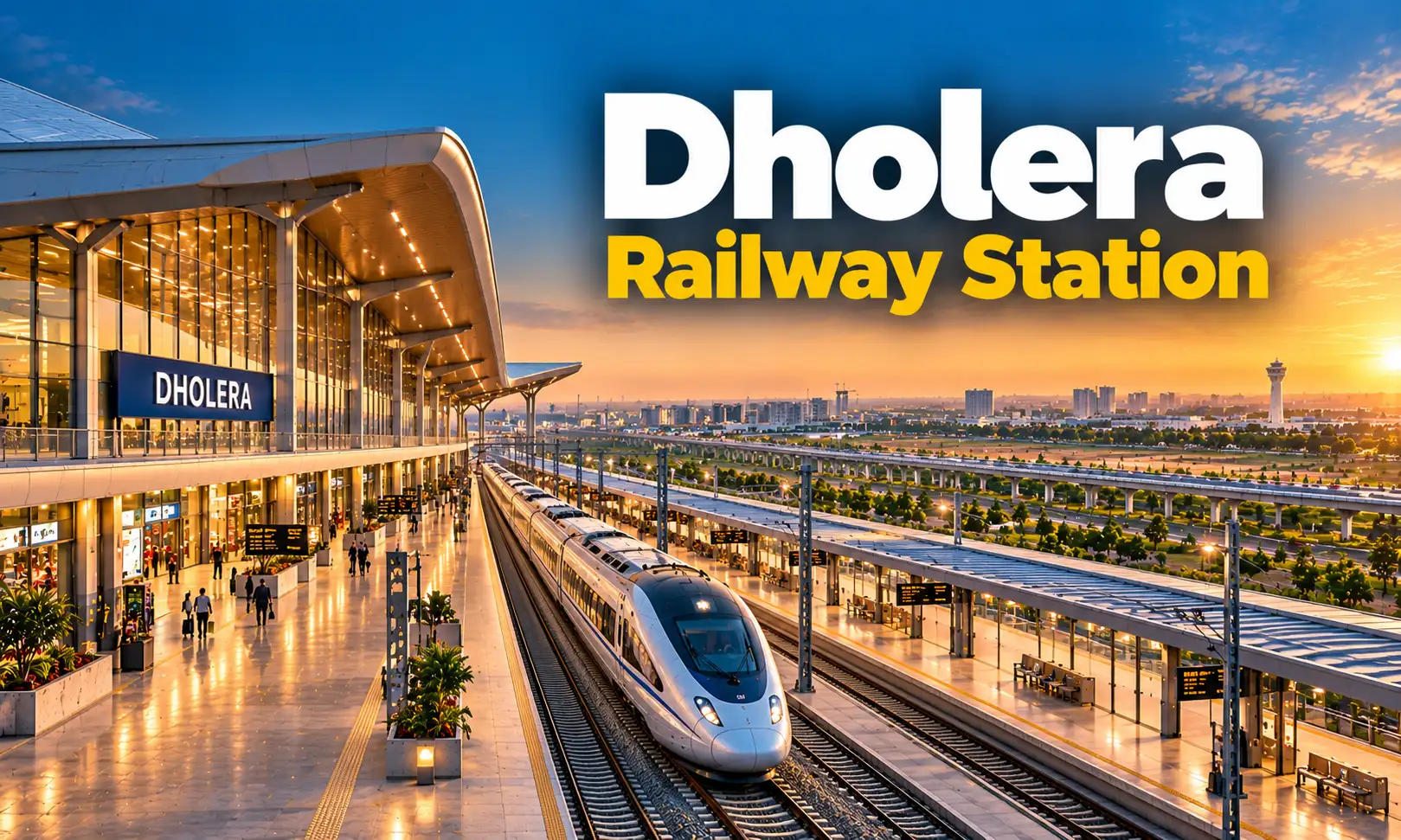
Rail approved. In May 2026, the Union Cabinet cleared a semi-high-speed rail link to Ahmedabad worth around ₹20,667 crore.
Fresh funding. The Gujarat Budget 2026-27 allocated ₹610 crore for Phase 1 of the Logistics and Trunk Infrastructure Project at Dholera SIR — roads, drainage, utilities and airport-supporting works. A separate ₹650 crore proposal covers a bulk water pipeline network for semiconductor and electronics manufacturing.
Every one of those links feeds into something built earlier and talked about less: the internal grid.
The Grid Came First
Most cities grow first and fix their infrastructure later. Dholera was built the other way around.
Before the first factory gate opened, the Dholera road network and its underground utility corridor were already laid across the activation area. Asphalt, ducts and reserved right-of-way, waiting for the city to arrive.
That sequencing is the single most important thing to understand about Dholera Special Investment Region.
72 km of Roads, Built to a Hierarchy
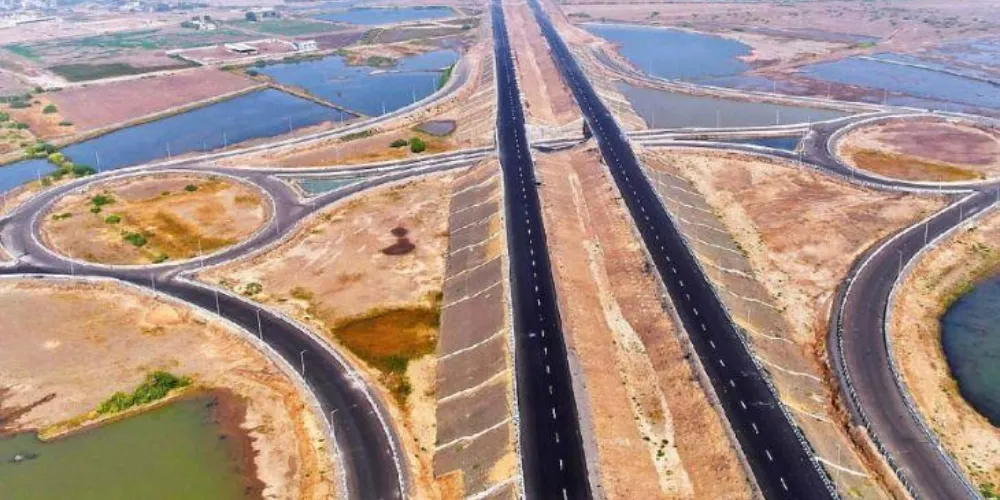
The internal network spans roughly 72 kilometres, with carriageways from 18 to 70 metres wide.
The variation is deliberate. Wide arterial spines carry heavy industrial traffic. Collector roads distribute it into sectors. Narrower access roads serve individual plots.
Anyone who has driven an unplanned industrial belt knows why this matters. Container trucks and two-wheelers share the same eight-metre lane, and the bottleneck never gets fixed because there is no land left to widen into.
Dholera reserved that land upfront. The right-of-way exists whether or not the traffic does yet.
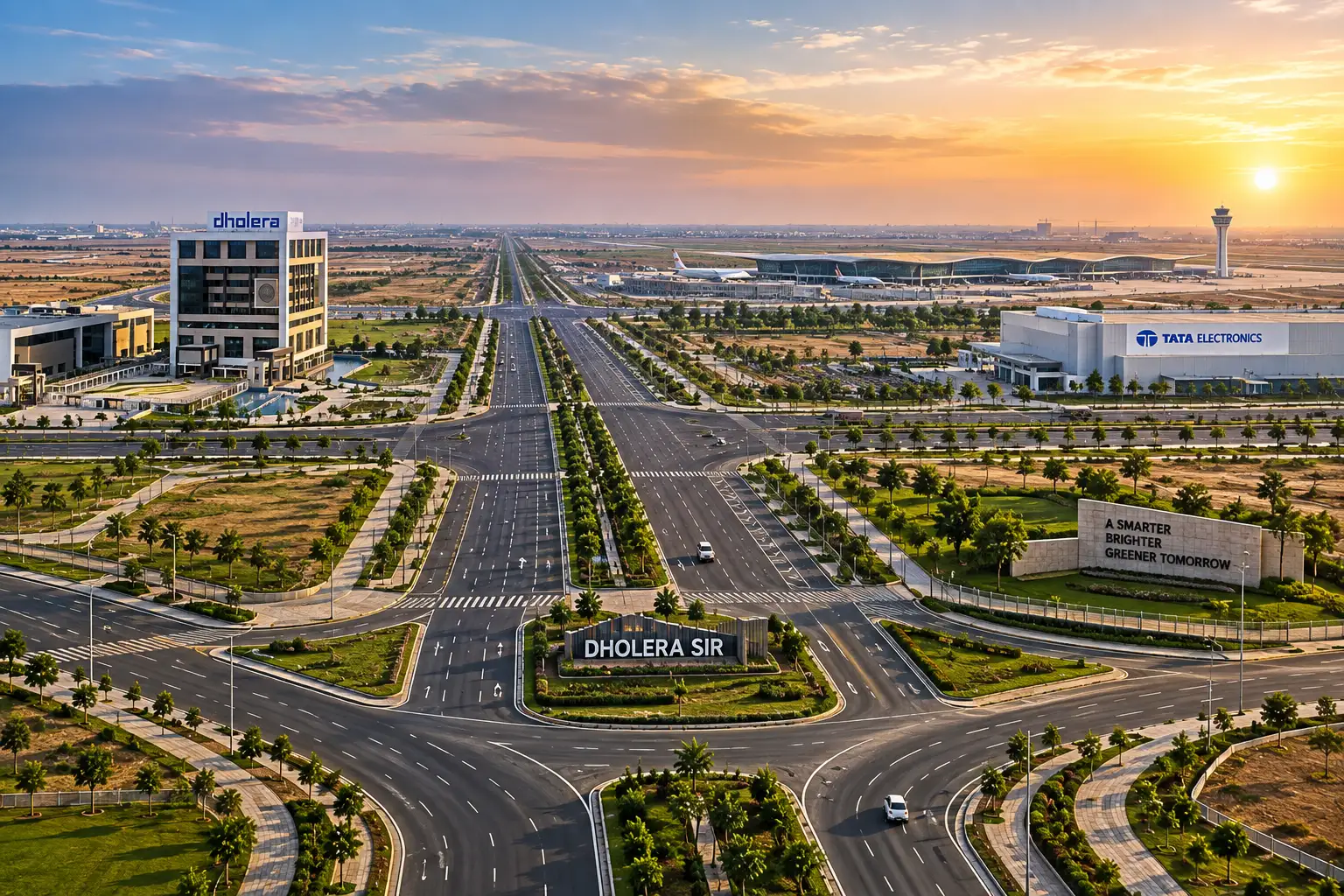
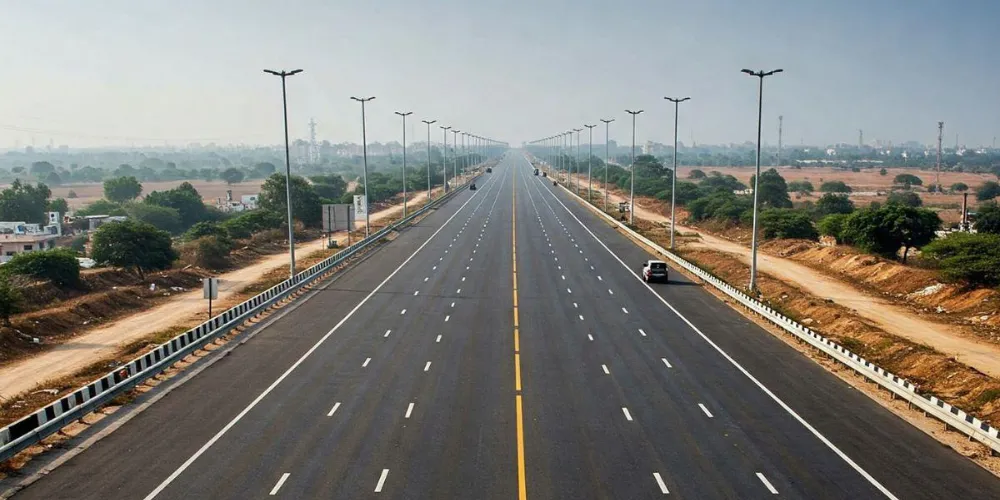
Junctions are signalised, lighting is installed along completed stretches, and geometry accommodates future volumes rather than current ones. Which is why photos of Dholera show wide, largely empty roads.
At this stage, the emptiness is the point.
What Runs Beneath: The Utility Corridor
The more consequential engineering sits below the surface.
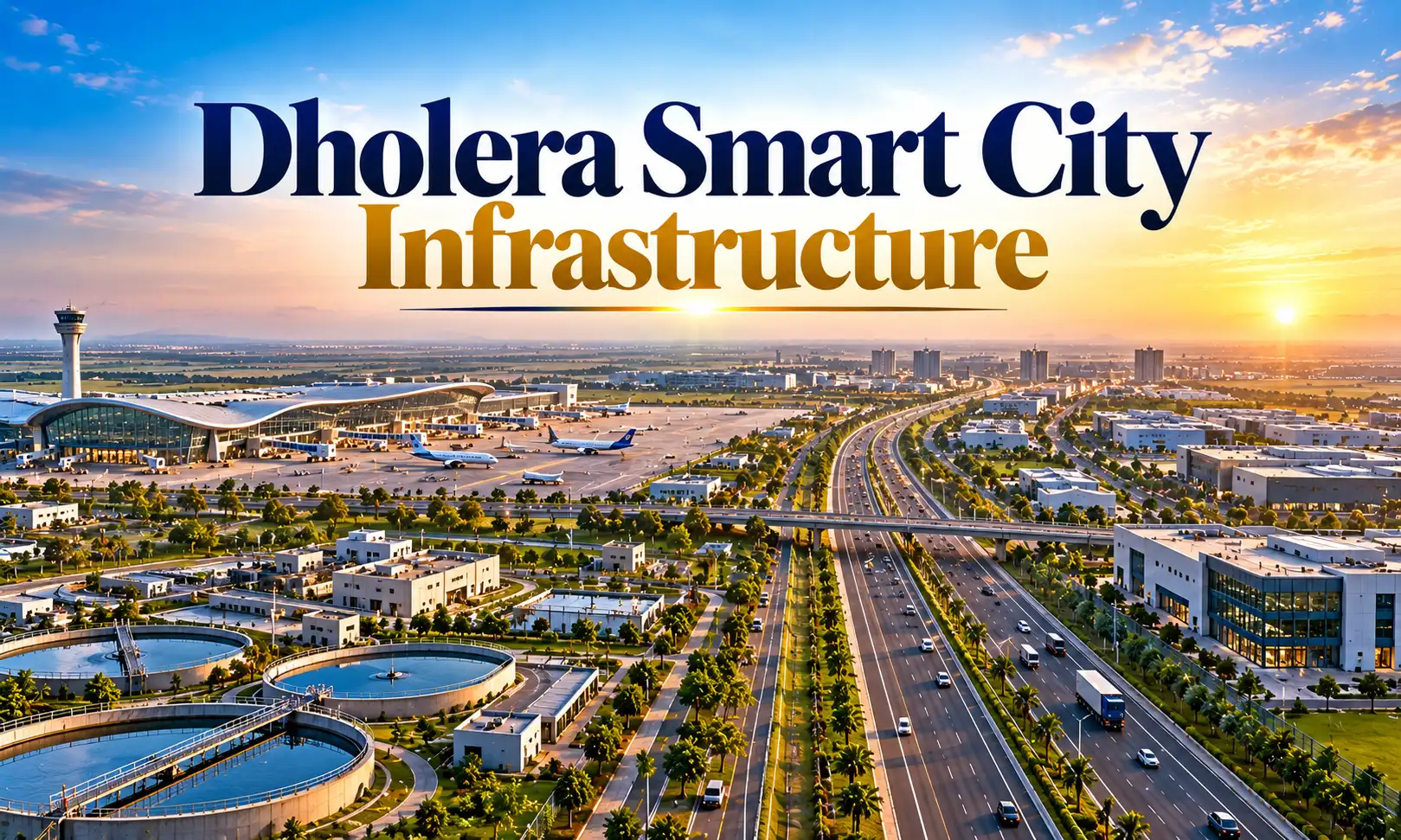
Alongside the roads runs a dedicated underground utility corridor — a continuous system of ducts carrying potable water, industrial water, gas, power cables and ICT fibre, plus drainage and sewerage.
Three practical consequences follow.
No overhead clutter. No poles, no sagging cable spans, no transformers on footpaths.
No repeated road cutting. In a conventional Indian city, a new fibre line means digging up a road resurfaced six months ago. Dholera’s corridor is accessible without tearing the carriageway apart.
Plot-ready connections. Trunk services already run past every serviced plot, so water, power and data terminate at the plot boundary. No separate utility extension project to wait on.
All of it is coordinated from Dholera’s central command and control facility, which monitors utilities, traffic and city systems from one point.
Room Reserved for People and Transit
The Dholera road network is not purely a logistics grid.
Each corridor cross-section includes pedestrian walkways, dedicated cycling lanes, landscaped plantation strips, and a reserved central corridor for future rapid transit.
That reservation deserves attention. Setting aside transit right-of-way before development is unusual in India — and it is exactly what makes retrofits so expensive elsewhere.
Metro and BRT projects in established cities spend years acquiring land or going elevated because no corridor was ever kept free. Dholera kept its strip vacant from day one.
A mass transit line can be laid there without demolition or acquisition when demand justifies it.
Why the Road Layer Matters Commercially
Dholera’s industrial pitch is anchored by Tata Electronics’ semiconductor fab and a growing electronics ecosystem. That pitch depends entirely on this groundwork.
Fabs are among the most infrastructure-hungry facilities in manufacturing — ultrapure water at volume, uninterrupted power, high-capacity data links, reliable heavy-vehicle access.
A fab cannot wait three years for a utility corridor to be dug.
For land buyers, the road network functions as a reliability signal. Announcements get revised; laid asphalt and buried ducts cannot be un-built.
Serviced, plot-ready land inside a completed grid behaves differently from raw land near a proposal.
None of which makes Dholera a short-term play. Timelines shift, and anyone evaluating it should work from official announcements and quarterly progress updates rather than promotional material.
The Takeaway
Seventy-two kilometres of serviced roads with utilities beneath them is not a headline statistic next to a ₹91,000 crore fab or an international airport.
But it is the layer everything else sits on.
Dholera’s bet is that a city built grid-first absorbs growth without the retrofitting bill every other Indian industrial hub is still paying.